Showing posts with label Travel. Show all posts

Sunday, 11 February 2018

Snowdon - at last.

Oh no! The alarm hadn't gone off - I'd overslept!

Except I hadn't. I'd just dreamt that I had. This recurring (and very irritating) dream plagues my sleep whenever I have something exciting or important to look forward to the next day. And I certainly had something to look forward to. Even the thought of a 3:30am wake up and a long drive were not enough to dampen my spirits.

I dragged myself out of bed after what felt like a woefully inadequate sleep; that dream has a lot to answer for! My kit was all packed and stacked ready to go. After well over a decade of procrastination I was finally heading to Snowdon.

Having double-checked and loaded my kit, I left home and headed west for the Welsh border. On my drive I listened to the audio book of that classic tale of British wilderness (albeit Scottish rather than Welsh wilderness) 'The 39 Steps' by John Buchan. The sky was bright with a nearly full moon, although I knew that clouds were forecast to be my fate as my journey progressed.

Sure enough shortly after I crossed into the land of the Red Dragon the clouds blocked the moon as completely as if I had driven into a cave, limiting my view of the wider world to the reach of my headlights for the remainder of the trip. I made good time across Wales - at that time of morning traffic isn't exactly heavy - and arrived at Pen-y-Pass car park and the proper start of my days adventure at about 6:30am.

Here I listed my spare kidney on Ebay to fund the parking charges, donned my warm clothes and a head torch and rechecked the map of my route. When I initially started planning for my trip to Snowdon I had hoped to complete it in milder weather and follow the Snowdon Horseshoe route, along two precarious ridge lines up to and back down from the summit. When I learned that there was sure to be snow on the higher ground, and that I would need to start my ascent in the dark because of when I needed to get home, I shelved that plan for a later day. The revised plan was to get as far into the ascent as possible as quick as possible in case there was a sunrise worth photographing. So I settled on the broad and well surfaced Miners track and started on up.

The thick cloud still obscured the moon, and sunrise was still over an hour away so I began in total darkness with no view ahead, but I knew that the mountains towered ahead of me. Soon a few chinks opened in the cloud letting through the first hints of dawn and giving me enough visibility that I could turn off my torch. As my eyes adjusted to the new, lesser darkness I could make out a snow capped outline ahead of me! I assumed this was Snowdon and smiled to myself, my goal was in sight - I was wrong though. What I could see was just a part of the ridge, some 300m below the still cloud bound summit.


The Miners track is straight forward and easy going until the far side of Llyn Llydaw where it gets a little steeper and rougher, but it is above Glaslyn that the path, and the view, starts to get really interesting. This is about 2/3 of the linear distance into the route, but only 1/3 of the vertical ascent, leaving a steep route to negotiate over the last few kilometres. It was also around this point that the laying snow became persistent and the rising sun started to break through a chink in the low hanging clouds. The combination of cool blue lake, majestic snowy mountains, broken cloud and warm sunlight made for a breath taking view!

But the concept of 'a view' was about to become irrelevant. The laying snow and the lowering cloud merged into a wall of white before me. I lost the route of the path in the snow several times and struggled to gauge how much further I had to go. I couldn't see the track 30 meters ahead at times, let alone the summit. The wind driven snow had done a comprehensive job of smoothing out the hill side, blending series of steps into smooth icy slopes. With the aid of poles and studded snow walking aids (proper crampons don't feature on my kit list yet) I made it to the summit ridge feeling in my inexperience as close to a proper alpinist as I've come yet, with just a short walk along the ridge remaining to arrive at the actual summit.


The ridge looked alien! The frigid temperatures and driving winds over the preceding days had sculpted icy feathers over every inch of it. Snow remained only in the most sheltered of spots, the rest blasted off by howling winds. The swirling ice traced the eddies of the wind as clearly as smoke in a wind tunnel and coated the entire landscape, with only the dark rocks beneath breaking the white of the ice. The now brightening cloud still firmly clamped on top of the mountain cast a flat, contrast-less light uniformly over the ice-coated everything and created conditions unlike anything I have seen before - a completely monochrome landscape.

The summit cairn and trig point looked like a chaotically iced wedding cake, and the deserted train station like a movie set from 'The Day After Tomorrow'. I was the first to the top that morning - no one else had been crazy enough to start out for the summit as early as me - and the solitude was palpable, although short lived. A trio of walkers had been gradually catching me for the past hour while I kept stopping to take pictures and they arrived just a few minutes later. I'd like to think that pioneering a path through the fresh, unsullied snow for them had slowed me down, but the reality is almost certainly just that they were faster than me!


I didn't stay long at the top. I had made my pilgrimage, had my adventure. Call me anti-social but sharing these special places with throngs of other people spoils it for me. More often than not it is the solitude itself that I am seeking, and the personal challenge of completing the ascent in the first place, the views are a bonus, but a very welcome one when they are there! Sure enough I passed many other hikers toiling upwards while I descended, but even when the cloud lifted and the iced-gem summit appeared against a bright patch of blue I didn't envy them, because they had to share it, and I had had it to myself, if only for a few minutes.

Now that the clouds had lifted and the sun was properly up the views on my trek back down were every bit as stunning as you would expect of the Snowdonian Mountains in winter. Snow capped peaks were there to be seen in every direction and the low winter sun picked out the finest of topographical details in a landscape which begs the question why we Brits ever feel the need to travel abroad to see beautiful scenery. I made it down about 5 hours after I originally left the car. I shed my cold weather kit, now feeling distinctly over dressed among gaggles of children and young couples who at midday were only just arriving. I left quickly, keen now my adventure was over to get back to my family for the remainder of the day. A few miles away I had to stop and take in the view behind one more time. The clouds had now lifted fully and the snowy summit of Snowdon had revealed herself to all the world. It was the perfect parting memory, one that is certain to bring me back again soon. This may have been my first visit to Snowdon, but it won't be my last!


Richard

Friday, 12 January 2018

A Belated Happy New Year; and sharing some plans!

Happy New Year to anyone reading this. I hope you enjoyed whatever break you were able to have, and are looking forward to the year ahead.

Hoping that 2018 brings many more mornings like this i.e. out of doors enjoying them!
Along with just about everyone else a New Year triggers for me a flurry of goal setting, plan making and commitment (some stronger than others). I mentioned on social media the other day that some of my plans for the year required me to be somewhat fitter than I currently am, and I thought I'd flesh out those plans a bit for anyone who is interested (recognising that that may be no-one at all). This is for two reasons 1) because it is by far and away the most exciting thing I have to write about at the minute and 2) if I write them down now it will add to my motivation later in the year when I am trying to follow through with those plans. As such plans always seem, at some point, to prove inconvenient, difficult or hard, any extra motivation would be welcome.

I'll come to that in a minute. I also mentioned that I wanted to try and post content, particularly images, which are more representative of EVERYTHING I get up (which is relevant to the 'wild guy' narrative anyway). Don't get me wrong, all the images I post are mine, but I am often guilty of only posting the ones which I think are good in their own right and as such the story that they tell is often a little disjointed. I'd like that story to become a bit more complete, and that may involve posting some images which seem of a lower standard but tell the story better. It still isn't going to be my personal life, photo's of the office and such like, but it may be ones which on the face of it seem ... worse, but I'll try and explain the story they tell as I go.

My plans for the year then. Basically my plans centre on the desire to make 2018 the year, hopefully the first of many, where I stop saying 'that would be cool / great / brilliant' and start saying 'that WAS amazing / incredible / unforgettable!' and so on. In other words I want it to be the year I start doing rather than dreaming. Many of the plans for the year are the culmination of years, in a few cases decades, of dreaming of adventures. I won't set out detailed plans now because I'll be writing about them all individually both at the planning stages and at the fun bit (although I find the planning fun too if I'm honest).

Therefore in an approximate chronological order (which is subject to change!), in 2018 I will:
- Climb Snowdon
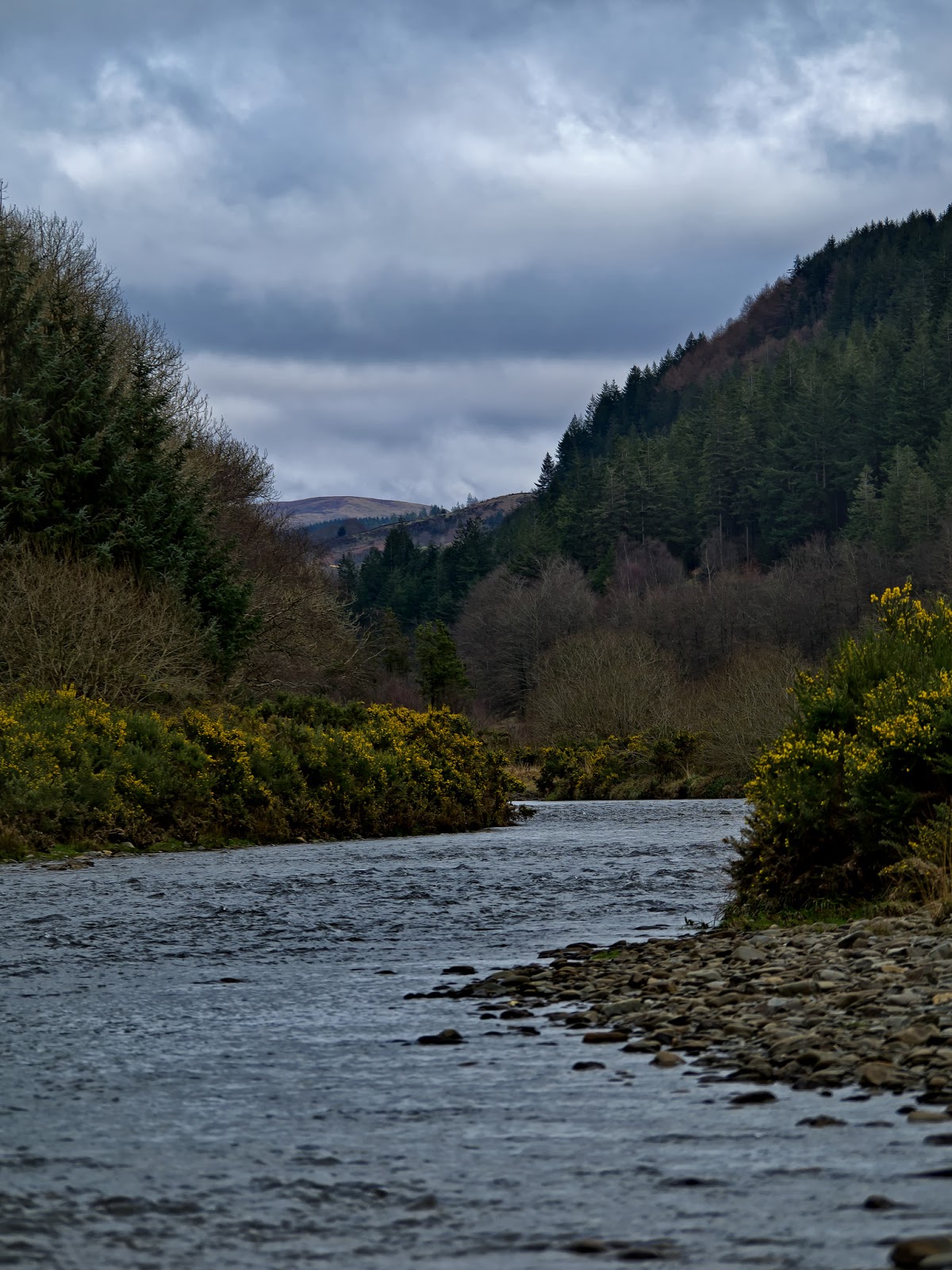
The Ystwyth in Mid-Wales. All being well at some
point this year this view will include me, mid-river!
- Visit the Outer Hebrides; specifically fly into the only commercial airport in the world where the runway is on a beach - Barra - the southern most island in the Outer Hebrides island chain. (Flying this route was my dream job when I was a teenager. This trip is a birthday present for a 'milestone' birthday this year - thank you to my beautiful wife and my parents-in-law for making this possible)
- Visit the Isle of Skye for a family holiday
- Hopefully climb Ben Nevis again on the way to Skye.
- Walk / Swim / Raft from 'source to sea' down the River Ystwyth in Mid-Wales.
- Do the UK Three Peaks with my brothers

That will do to be going along with, there are a few others which have bigger question marks hanging over them at the minute, mostly just down to available spare time, so I won't add them yet but hopefully there may be a few extras to add to this list before years end.

The fitness concern is largely centered on the Three Peaks attempt. I don't just want to complete it, I want to complete it well and if not easily then at least without serious discomfort. It's for this reason that I will be trying to make the most of working in the Peak District and actually going out for a walk, usually up a steep hill, before work or during lunch breaks and so forth. To provide one more level of motivation I signed up to a few 'challenges issued by UK outdoor magazines;
- the #walk1000miles 2018 challenge (Country Walking Magazine), and
- the #everestanywhere challenge (Trail Magazine).

Both should be eminently do-able provided I pull my finger out and actually start making better use of my time... what this essentially amounts to is me learning not to sleep as much! I'll leave this there for now - if all this comes off there will be some stories to tell, pictures to share and hopefully maybe even a little inspiration to give. Not that I expect anyone to be inspired by my efforts, but rather I hope that you may be inspired by the places I visit and the enjoyment I hope to derive from the journeys to get there!


Richard


Monday, 30 October 2017

Archive: Rivers - Supermarket, Highway, Inspiration

** I'm cheating a bit here - It's been a busy few weeks and I haven't had a chance to 
write any new blog posts, although there is stuff to write about! To keep material 
coming I thought I'd share this blog post from a blog I contribute to occasionally, 
originally written a few years back it is still as relevant now as when I wrote it. **

When I am out and about, whether it be for a gentle countryside walk with my family, a solo adventure, dedicated photography trip or a foraging session, I am always drawn to certain features in the landscape . Rivers are one of those features, particular smaller rivers in deep cut, wooded valleys. There is something about these valleys that never gets old to me. As a teenager on the North Devon coast I had plenty of opportunities to explore these sort of valleys, including in and around Exmoor, to this day one of my favourite parts of the UK. 

Me, contemplating life alongside the River Spey in Scotland.  
You may ask why, and I don't really know the definitive answer to that question but I have a few ideas. The first revolves around the concept of mental maps (something I had written about previously and will probably do so again for this blog), particularly resource maps. Rivers are a phenomenally rich resource (I originally wrote this for a bushcraft blog - www.bushcrafteducation.co.uk - and so it was originally aimed at foraging and that sort of topic):

First and foremost they are a readily available source of water. In the higher reaches of rivers where they run fast and clear it is also likely to be clean water which you can drink straight from the river. Even these days in areas where agricultural run off may have sullied the water, or in its lower reaches where it runs slow and silty, with simple techniques it can be filtered and purified to be made safe to drink.

They were to our hunter-gatherer ancestors an important source of protein, and still are today albeit one which is far less used than it once would have been, in the shape of water birds*, fish* and crayfish (although sadly these days an invasive species, the American Signal Crayfish which has driven our native White-clawed Crayfish to the edge of extinction). If you know where to look there may also be freshwater mussels or as you get closer to the coast and into the brackish and tidal zones of the river there may be other salt-water shellfish to harvest. 

With a constant source of water and, further down the river at least, nutrient rich silts, river valleys are often a great source of plant food as well. To name a few, wetland areas associated with rivers are often home to sedges (Carex spp.), some of which have seeds which can be eaten; Bulrush or Greater Reedmace (Typha latifolia) can be found which has edible rhizomes as well as being a useful tinder. These days in the UK several very common edible plants found along rivers are non-native species, certainly not something our hunter-gatherer forebears would have been familiar with - Himalayan Balsam (Impatiens glandulifera) and Japanese Knotweed (Fallopia japonica). And by eating either of these you are also doing your bit for conservation by reducing the population of an invasive plant. 

Some of the trees often found in close association with water are Willow species. Willow is an extremely useful plant to a bushcrafter providing bark for cordage & withies for basket making. In addition its bark contains Salicylic acid (in fact 'Salicylic' is derived from Salix, the Latin name for the Willow family) which is a component of aspirin and it has been known for centuries that chewing on willow bark could ease aches and pains and reduce fevers. 

Having established that rivers are useful for resources I think that part of my fondness for rivers stems from an instinctive draw to a landscape feature which is of use to me. But I don't think that's the whole story. 
Rivers are also beneficial for moving through the landscape. In a very modern sense we can see this based on how many roads or railway lines follow the course of rivers. In many circumstances the river bed itself will be the path through a landscape which experiences the least severe changes in elevation - waterfalls being a fairly obvious exception! By following these ready made paths modern engineers have saved themselves time and effort but also created for themselves different issues by placing their projects in the path of an immense erosive power - but that's another story.

I don't think this benefit would have been unappreciated by the people who roamed the land when roads weren't even a futuristic dream. Especially during the summer, when vegetation was at its highest and most impenetrable, and the water level was lower likely exposing a portion of the river bed, using these natural routes to move inland from the coast or the opposite would have saved effort and ensured that food to fuel your travels was never far away. Certainly in dense woodland I have followed small rivers or streams, sometimes alongside them and sometimes by necessity in them to aid my movements and help me to move more quickly or easily. It has long been a goal of mine to follow a river from its source to the sea - I think it would be a fascinating journey! 

In all this I have skirted around the potential of travel on the water itself. While not a expert in water travel I have been lucky enough to do a bit of kayaking and rafting both on rivers and the sea and it is a great way to travel. Early inhabitants of the UK may not have cashed in on this opportunity as much as those in other parts of the world, the effort required to manufacture water-borne vessels perhaps outweighing the advantages in many situations on a relatively small island. It is however well documented that early civilisations in other parts of the world focused their travel on waterways with variations on the theme of dug out canoes and later in the northern hemisphere with bark canoes. 

If you are referring back to the title you'll notice we are two thirds of the way through this tale. There will be those who read 'inspiration' in relation to 'river' and think I have lost it - city folks perhaps for whom rivers are places for stolen bikes and shopping trolleys, pollution outflows and perhaps if your lucky, the odd gull or duck. Luckily in Britain today even this inner city image of rivers is largely a thing of the past with tighter controls on pollution and water cleanliness but still the Thames in London or the Mersey in Liverpool are not the sort of rivers I look to for inspiration. 

The picture that comes to my mind when I think of inspiring rivers is a small river, wooded valley sides rising steeply above, clear water trickling quickly through a jumble of moss-covered rocks and woody debris. A Dipper rushing past or watching you from a half-submerged rock. Perhaps a little further downstream a whistle and a flash of blue alerting you to what has got to be the UK's most colourful bird, the Kingfisher, going about its business. If you're lucky some muddy footprints indicate a Otter isn't far away, and if your even luckier a glimpse of these now thankfully returning mammals. In the early morning mist a Roe deer perhaps, tentatively crossing from its shelter on one side to prime feeding ground on the other. As the sun gets higher, the dragonflies, the birds of prey of the insect world start to come to life. I could watch their aerial battles for territory and bright colours for hours before I got even a little bit bored. At the right time of year mayflies provide a spectacle, both as they 'dance' above the water and as they are fed on by every valley dweller you can imagine. I could go on... so I shall.

As a teenager I was lucky enough to work on a nature reserve for a week in Scotland. (On a side note, to any young person reading this, I cannot recommend highly enough this experience.) One day having been to check a hide over looking a large marshy flood plain alongside the river Spey, I spotted a family of fox cubs playing on a 'island' in the marsh, their earth was obviously located on the slightly higher and therefore drier ground above the wetland, among the gorse. On my return journey to my accommodation that evening, a gorgeous summer evening, I cut across the reserve - cresting a ridge having climbed up steeply through birch woodland I looked up to see an Osprey flying over, fish held tightly in its talons. Standing on the ridge transfixed by this spectacle I had never witnessed before I became aware of movement in the valley meadow below - a Roe buck, summer coat radiant red in the low evening sun had moved out of the woodland to browse. What a day! Not all strictly river associated but all within a stones throw.

The view from the hide I mention. The 'island' where I saw the foxes is in the middle ground on the left, the meadow where I saw the Roebuck a mile or so up the valley to the North (right in this picture). I have also seen Roe deer browsing through the marshland here - one doe in particular was selecting only umbellifer flower heads to eat, the only time I have seen this behaviour and a perfect example of the selective feeding style of Roe Deer. 
I know of no sound more relaxing and calming than the gentle trickle of a river to lull me off to sleep in an evening after a strenuous day out of doors. And in the same way I could sit, and have done on many occasions, and stare at a fire burning for hours, I could sit and watch a river flowing past, listening to its gurgles and trickles just as I listen to the pops and crackles of my fire. With the calls of Kingfishers or Dippers replacing the Tawny Owls I so often hear when sat by a fire in woodland.  

Beyond the river itself the landscapes they have created can be awe inspiring all on their own, dramatic landscapes all over the UK have been carved over many millennia by the rivers which now seem like a side show in the valley bottom. Caves and tunnels, stacks and caves and water falls all indicate the sheer power of water in the landscape and can be as spectacular as their coastal counterparts. 

We all I dare say have 'favourite landscapes' - I would certainly have to say that rivers and the associated valleys and wetlands are well up there for me. They provide food and fun, mental relaxation and the ability to move through the landscapes we love. What's not to like!

Richard


* - It needs to be remembered that the taking of certain fish and all water birds, and the methods of taking or catching them are restricted by law in the UK. In certain circumstances you may just need landowners permission, in other it is far more complicated. 

Thursday, 12 October 2017

Land Rovers Old and New

**I have no intention of turning this into a car review blog, but these are Land Rovers, come 
on, special case - the go-to tool for conservationists and adventurers alike for decades!! **

As a patriotic Englishman, there are certain nonnegotiable loyalties - Fish and Chips, Full English Breakfasts and Land Rovers among them. That last national requirement comes pretty easily to me, I've always loved Land Rovers. I still have the small toy Defender I played with as a small boy, now a bit rough around the edges - like real Land Rovers of its vintage - but still going plenty strong enough for my young son to play with at present.

I've come a fair way since the dinky toy, via poured over brochures and magazines, unrealistic and as yet unfulfilled dreams of a suitably utilitarian and perpetually muddy Land Rover gracing my future drive way, through to a poor mans Defender (Suzuki) a full 10 years after I learned to drive. But I did end up choosing a career that would, I hoped, on a relatively regular basis send me to places where Land Rovers are in their element. So far the plan has worked... a bit. I've driven various Land Rovers over the past few years, among other makes and models, and relatively often 'off road' - off metalled roads at least.

A few weeks ago I found myself reversing up a very steep, grassy slope in a double cab Defender 110 with 250kg of water destined for a conservation contractor in the back. (It handled it easily by the way, and it felt REALLY steep!) Looking across the deep-cut, wooded valley bottom from the cab, I thought to myself that this wasn't such a bad day 'in the office'. (I changed my mind a little later after carrying the water the rest of the way up the hill!)

What made this particular day in the office even better is that the next day I wasn't going to be in the office at all, because I was going to the Land Rover experience centre at Peckforton Castle in Cheshire.

Like many other fans will have done, when news of a new Land Rover model was released, in this case the new Discovery, I signed up to be 'kept up to date on developments' - in all honesty I was just after another brochure of another vehicle I couldn't possibly afford to idly flick through and then discard. But back in June I got an e-mail which seemed too good to be true:


Lots of love, 
Land Rover

Well, it may as well have been signed with lots of love, because that's how it felt!

I triple checked the small print for the price, but no - Land Rover really were giving me (and a guest) the experience session for free! Arrangements were made, a date was set, my guest invited (thank you for keeping me company and having fun, beautiful wife) and eventually the day dawned wet and grey. Perfect - more mud!

I'd never expected to have the opportunity to drive both Land Rover's longest serving stalwart and newest recruit so close together. And what a stark difference! The Defender is by far and away the best, worst car I have ever driven; the New Discovery on the other hand, is probably the best car I have ever driven, full stop.

We drove it round the tracks at Peckforton for several hours: muddy tracks, deep water, steep hills, ruts, wheels in the air, the works. And it ate it all, never mind for breakfast, without even waking up - it was incredible. The technology is phenomenal - HDC, ATPC, Terrain Response 2. I didn't even notice the Air Suspension raising the ride height. The sheer number of buttons is bordering on intimidating. And then there is all the automated cleverness. Add to that supreme comfort, limousine refinement (at least so it felt to my limited experience of premium vehicles), the gadgets, screens, cameras, everything - the head up display was a particular favourite of my wife. Oh, and I could definitely get used to an automatic gearbox.

If someone were to hand me the keys and tell me to drive off into the sunset, which to be fair is almost what Land Rover did for half a day, I would thank them and do exactly that, with barely a backward glance.

But...

... I'm pretty old school in my tastes. I love the Defender. I have always loved its determination to retain function over form. And frankly, for me, in terms of looks it still beats all of Land Rovers current models hands down in its unashamed, utilitarian uniqueness! The only control at your disposal to alter the performance ready for an off tarmac adventure is a large, clunky lever which needs manhandling into position. I love the way that in low-range first gear it will do almost everything the Discovery can do with all its electro-trickery - that is to say it will slowly, patiently, crawl up or down, over or through almost any obstacle you care to point it at.

But...

... it doesn't do it comfortably, or quietly. I couldn't in all fairness subject my family to the discomfort of living with one, because no matter how much you love them, you cannot deny that they are as crude, unrefined and uncomfortable as a daily driver as they are unparalleled and unstoppable off road. In fact to be brutally honest, I enjoy driving the 2016 Defender at work, because it makes my 13 year old, well used Suzuki (poor mans Defender remember) feel refined, comfortable and quiet.

My poor mans Defender alongside the real thing.
And yet there is a certain something about them. Drive a Defender in the British countryside and you are an instant local, a stranger with a familiar face. Wave to villagers as you drive through a village you've never been to before and they will wave back - they really do, I've tried it. There is no other vehicle that has quiet the same familiarity or popularity, despite being 30 years out of date when production ceased.

The Discovery is worlds apart; unquestionably a 'better' vehicle than the Defender as far as facts and figures go, and undoubtedly a great vehicle in its own right. In fact, based on my very limited but very enjoyable experiences, it may just be that the only thing wrong with it, is that it isn't a Defender.

Unfortunately for me, or perhaps luckily because it means I'll never have to chose, there is one flaw which both share which makes a large proportion of what I have just written irrelevant. I can't afford either.

So to close, I want to reiterate my thanks to Land Rover for:
Firstly, kindly offering us such an enjoyable half day (the whole team were great by the way, we were made to feel very welcome, and our Instructor felt like an old family friend by the time he was through helping us make your lovely, new, shiny Discovery muddy) and,
Secondly, for making vehicles worth writing about for the last 60 odd years - please keep it up.

Richard


Monday, 9 October 2017

'The Best Books' - David Attenborough: Life on Air

Just a short post here. Like many people who have an urge to explore the natural world and seek out adventure, books have been a source of encouragement, inspiration and itchy feet since I was a child - (Television documentaries too, but to a lesser extent). I thought I might on occasion share examples of books which have really stood out to me in this field. What better place to start than with Sir David Attenborough's memoirs - Life on Air.

The man himself needs no introduction - he is a legend (and I don't apply that word as readily as most) in the world of natural history film making and global environmental conservation.

In a career spanning more than 60 years of conservation, exploration, education and research he has clocked up experiences it is unlikely anyone else will now be able to have in quite the same way and certainly not in the same quantity.

Not many people still working today can claim that in the line of their work they have encountered tribes never before contacted by the outside world; regions never before traversed by Europeans; filmed, photographed, recorded or documented species of animals, facets of primitive and ancient culture and relics of anthropological development never before seen by outsiders, never mind recorded, or documented. 

His world travel started in the days when multi-day boat journeys, propeller driven planes and locals with dug-out canoes were the norm. In these days of long-haul jets and global communications, where an appropriately large bank balance will get you pretty well anywhere pretty fast, it is perhaps difficult to imagine quite what these days were like. Maybe, just maybe, this was the golden age of travel - when everywhere was just about accessible, but only to those who really put in the effort. When the act of travel itself, at least outside of Western developed nations, was an adventure in and of itself. He travelled, by necessity, not because it looked good for television, by boat up rarely navigated rivers, on foot through unexplored tracts of rain forest, on horseback through wetlands in South America where vehicular transport was untenable - the list goes on and on. 

Nor was he merely a generic presenter reading someone else's script as seems to be the case so often nowadays. In fact he started his television career as a producer and director without appearing in the finished product. He studied Zoology and Paleantology at Cambridge, and at one point started to study part-time (alongside his work with the BBC) for a degree in Anthropology (this was interrupted by an administrative shake up which saw him promoted within the BBC). His main roles in front of the camera, for which he became a household name, were to come later and, its not an exaggeration to say, were to change the way natural history films were made.

He has been widely recognised for this work with, among other accolades, a Knighthood, too many honourary degrees to count and other industry awards in television, education and conservation, not to mention myriad newly discovered species named after him.   

However, he concludes his account with a description of why he continued, and indeed still continues, to produce these films and have these adventures:

"...I know of no pleasure deeper than that which comes from 
contemplating the natural world and trying to understand it."

I couldn't agree more and heartily recommend you live some adventures, and explore the natural world through the eyes of Sir Attenborough by reading 'Life on Air'.

Richard

Wednesday, 4 October 2017

Overseas Conservation Adventure - Latvia

**I am very tardy with this one - catching up from early July - its a bit long winded to, but it was 
a three day trip so hopefully that's OK? Anyway, I posted loads of pictures from my trip to Latvia 
for work, and this is the story behind those pictures plus a few I haven't shared yet**

4am is an offensive hour to be woken at the best of times. When it is preceded by an exhausted collapse into bed after 2am it is borderline criminal. Despite this, I dutifully heeded the alarm, rolled out from under the oh-so-comfortable duvet and collected the pile of neatly organised gear I had packed just a few hours before - very quietly. Waking a wife and two young children at that time of day is criminal!

10 hours later I was 1045 miles away (as the 737 flies) looking down on this: The Great Kemeri Bog in Kemeri National Park, Latvia.


I'd travelled by car, then bus, then plane, then another bus, then train and finally on my own two feet for the last few miles to get there. But when I got there... what a view and what a place!

Latvia's wild places definitely made a good first impression on me. This was my first trip to the Baltic and I didn't really know what to expect. Even as I was flying in over the Baltic Sea looking down on coastal lagoons, sandy beaches and thousands upon thousands of acres of forest I had already decided that this was my sort of place.

I had come to Latvia to attend the International Conference on Conservation and Management of Priority Wetland Habitats run by the Wetlands Life + Project and hosted by the University of Latvia. But that didn't start until the following day and I'd had a free afternoon gifted to me by my flight times so decided to use it wisely, and get a head start on the theme of the conference.


I'd picked out Kemeri after a bit of 'googling' (possibly the best adventure planning tool in the world) and figured out that I could get out there and back in the time I had... if I walked fast enough. The train ride out from Riga clearly illustrated that I was a long way from England!


The train was out of the capital city and into greenery in just a few minutes. Along the track people were foraging for wild food; young lime leaves, meadow-sweet flowers and mushrooms among the harvests I recognised. It's pretty unusual to see people in the UK foraging these days, but here it was obviously still a part of peoples routine. (By the way, the train in Latvia is ludicrously cheap - I did an almost 100km round trip for less that €4 return!)


Wood was an obvious and common theme. Not just because the train passed seemingly endless forest, but the houses, train stations, barns and other buildings along the route were built almost exclusively from it. Neatly stacked piles of firewood were obvious in most gardens. I got off the train at a station flanked by woodland and walked the last few miles to the start of the Kemeri Bog boardwalk (made of wood), again flanked for most of the journey by woodland, accompanied by darting dragonflies, and passing myriad wildflowers, many of which I had never seen before, and pollinators aplenty along the road verges.


The bog itself was awesome, literally. My job involves restoring upland blanket bogs in the Peak District National Park and South Pennines in North-West England. There, seeing Sphagnum moss, the building block of peat land habitats, is still a relatively big deal because decades of atmospheric pollution more or less wiped it out. Certainly seeing a carpet of it even just a few meters square is a rare occurrence. A major focus of our work is increasing Sphagnum abundance across our work sites.


Stretching out before me were thousands of acres where the vegetation was comprised of around 90% or more Sphagnum species. To those of you thinking, 'Yeah... And?', we are missing this in the UK, because we've ruined it all. This was the first real opportunity of my lifetime of enjoying the great outdoors, to see what these habitats can be like when they are still in prime condition, and I was blown away.


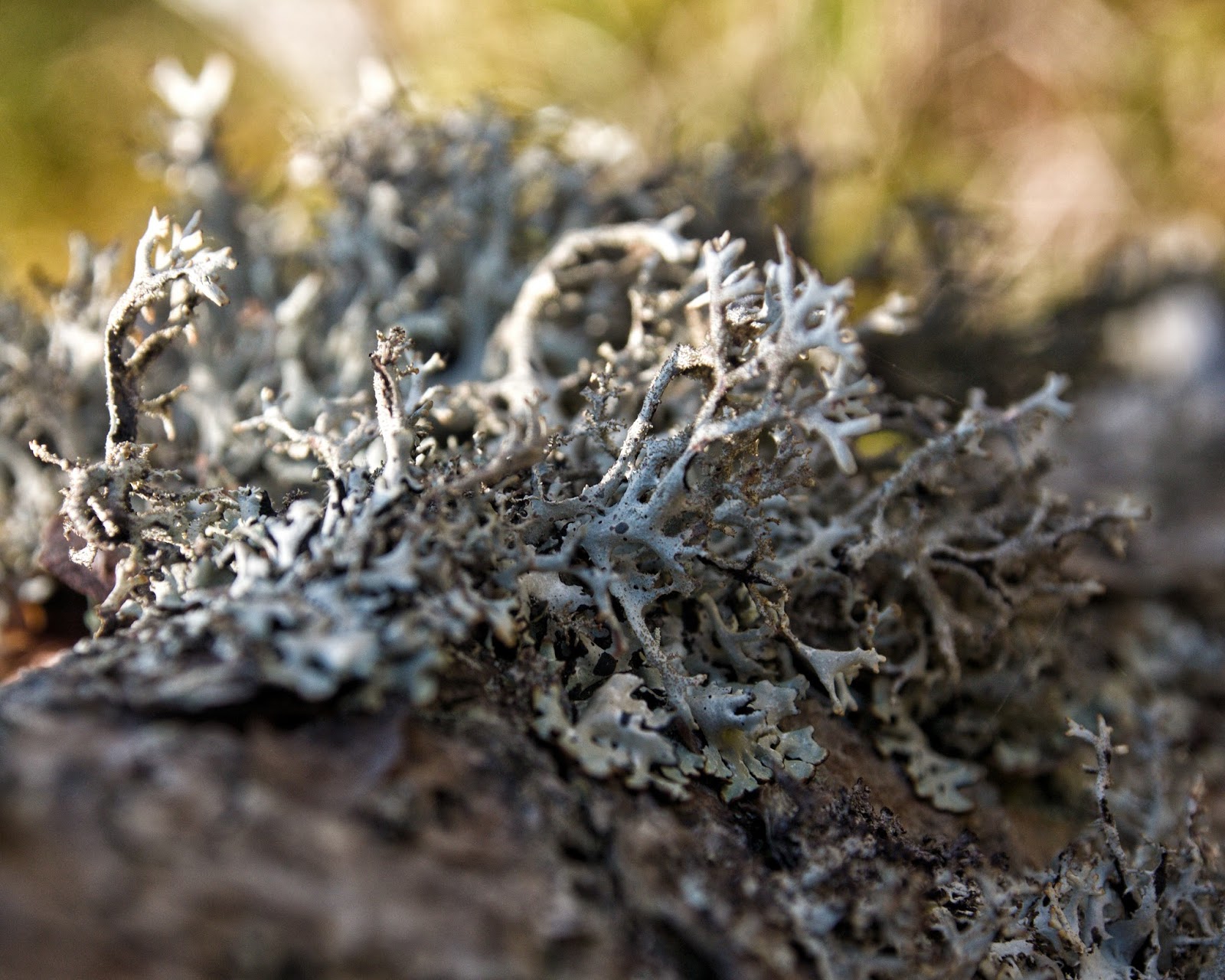
Because of the wet, acidic conditions in the Bog (or is it 'on' the Bog? Whatever...) any trees which get a foot hold are stunted and sparse, rarely growing very large, setting the area apart from the mature. high canopy forest surrounding it. Many die young and eventually fall, but the unique soil water chemistry created by the antiseptic, acidic qualities of the sphagnum means that they never really rot. Indeed that is how peat is formed, organic matter accumulates year after year, not able to decompose due to those unique chemical conditions. The successful vegetation is therefore pretty specialised; carnivorous Sundews, Bog Rosemary and dwarf shrubs. Lichens coat the trees in the clear air away from major industrialisation.


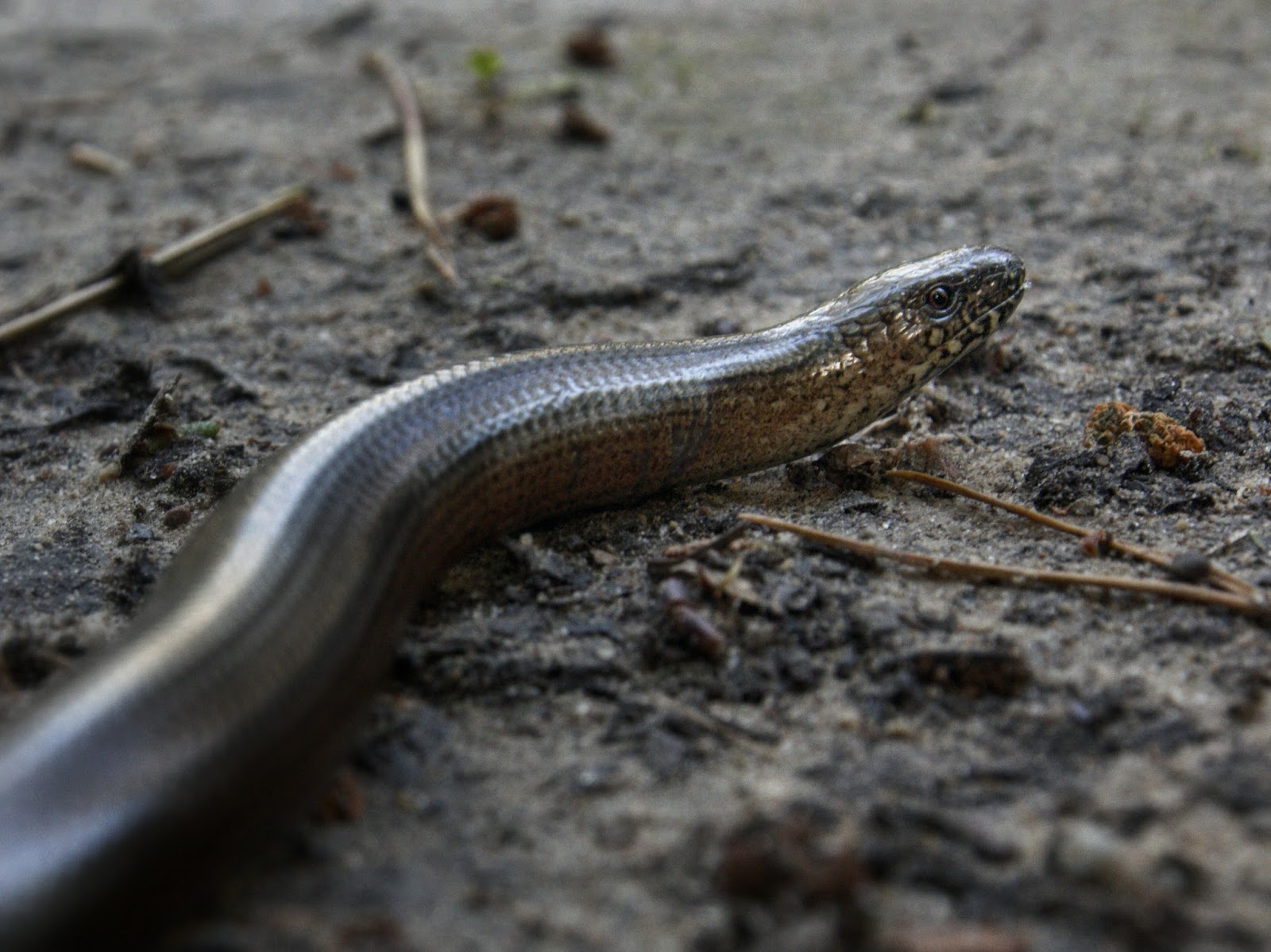
The boardwalk meanders for 3.5km across the bog, but encroaches on only a tiny portion of the whole area - it is vast! As I walked, lizards basking on the warm wood darted off, butterflies looped lazily in the sun while the raptors of the insect world, dragonflies, hunted smaller insect prey. It wasn't until I got to the observation tower at the furthest point of the loop that I was able to get a true sense of the scale of the place - phenomenal! If I hadn't needed to rush back to catch my train I could happily have spent a lot longer, but despite the time constraints I thoroughly enjoyed my visit. I even did my good deed for the day on the return journey, encouraging a frog and a slow worm to safety, when they both seemed determined to become road kill!

When I got back to Riga I walked the streets for an hour or so, familiarising myself a little with the city, and locating something to eat. This was interesting but to be honest, I was more comfortable and interested miles from a paved road on the Bog than I was in the city.


The conference started the next day, and we listened to a whole day of interesting and informative presentations about the conservation and restoration efforts going into wetland habitats stretching from the UK to Russia, and pretty much everywhere in between. These were very educational and encouraging in many instances, but a little disheartening too, hearing both the successes but also the struggles of these organisations to deliver their goals of a healthy natural environment. But, it was a long day in a university lecture theatre - reminiscent of my years of study which now seem a long way behind me! It was the field visits the following day that I was waiting for.


First we visited a restored site; formally milled for peat (harvested believe it or not for pig bedding... I know, thats what I thought too) now reclaimed for nature and turned into a flourishing wetland. It was interesting, the dragonflies were plentiful (always a bonus for me - I love dragonflies!) but otherwise the diversity of species was a little disappointing. I'm used to large expanses of water having birds, usually lots of birds; ducks, geese, gulls, swans, something at least. Here I saw very little bird life, which took me by surprise. At Kemeri Bog a few days before I had noticed the same thing. I saw a few pied wagtails and a pair of Woodchat Shrike - which was great, only seen one before and that was in Spain - but that was it. Back home, I see more birds than that in my tiny, suburban garden.


Next on the itinerary was what I had really been waiting for, another raised bog, Sudas-Zviedru Mire (say that three times fast, but don't ask me how to pronounce it because I can't remember) in the Gauja National Park. These raised bogs were the highlight of the trip for me, hands down. Both Kemeri and this one were eye opening - illustrating just how how much we have lost of our 'wild space' in the UK. So many of the places I had previously viewed as wilderness suddenly seemed pretty tame, and modified and ... just sad. Reserves I thought of as reasonably large started to look puny - this was just one of many similar sites and had at least two extra 0's on the end in terms of the land area.  


This time there was no boardwalk, we waded (I think that might be the most appropriate term) out through the saturated Sphagnum. Out among the bog pools and stunted trees, we listened to presentations on subjects including the original formation of these habitats, water chemistry, species diversity, ongoing conservation efforts and more, all through radio ear pieces which allowed me to keep listening while engrossed in photographing dragonflies and interesting plants (possibly the best field visit ever!? - who said men can't multi-task!), and trying not to fall into the bog pools.


The weather had been threatening rain with a vengeance for a while and as we were preparing to leave it delivered. Still, it seemed an appropriate end to the trip, as without that rain fall where would the bogs be? Certainly not wet enough to entirely soak my boots which, despite several sessions with the hotel hairdryer, were still soaked through when I repacked my luggage and headed for home early the next morning. All in all, it was a great trip, which I thoroughly enjoyed and learned a lot from. I hope there will be a next time as I only scratched the surface of what Latvia has to offer, and if what I saw is anything to go by, it has a LOT to offer if your at all interested in the natural world.

Richard 

To see all these images and more from my trip to Latvia take a look here at the Flickr album, or take a look at my Instagram @wildguyphoto.