Showing posts with label Summer. Show all posts

Tuesday, 25 June 2019

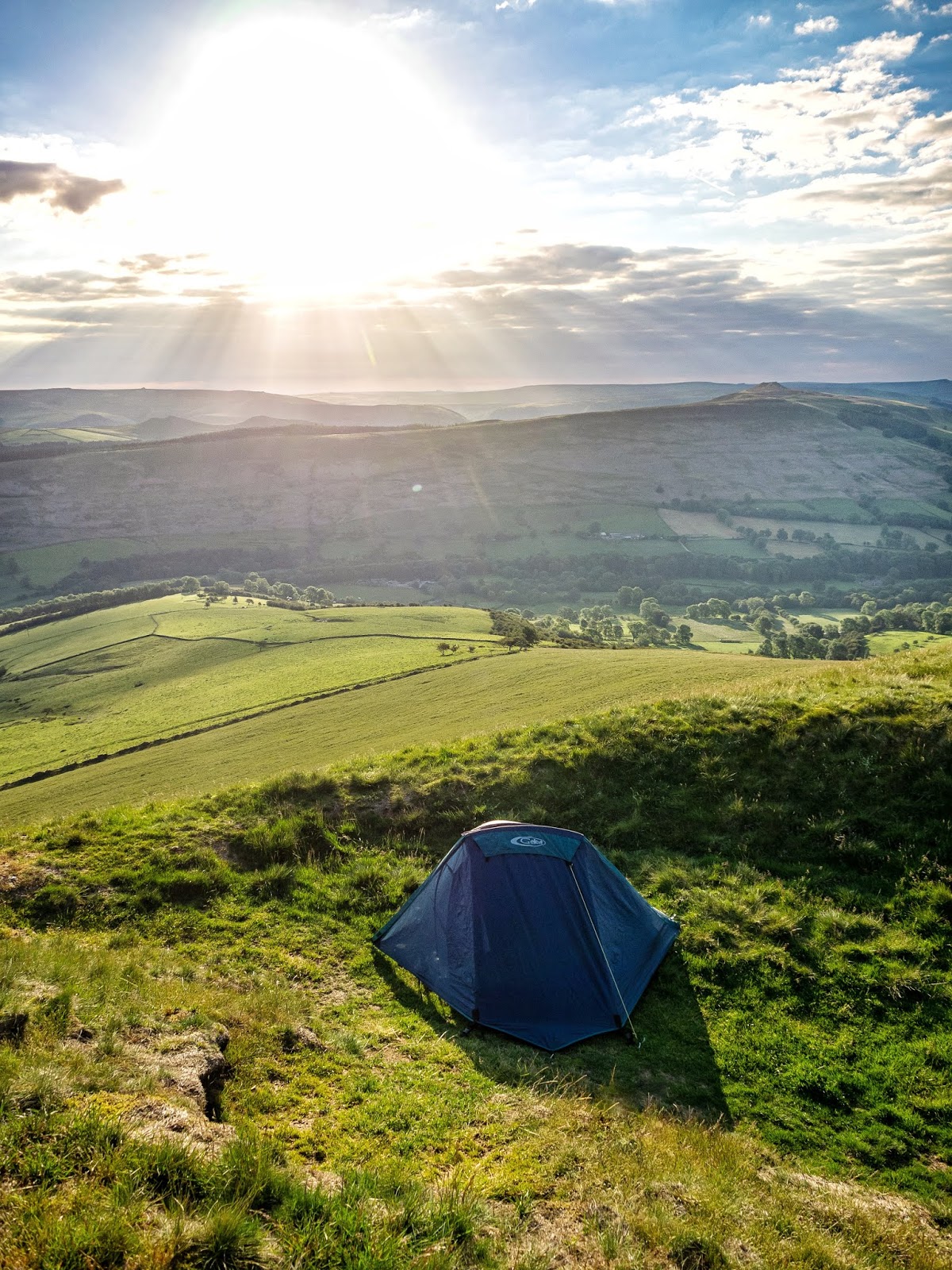
Daddy-Daughter Wild Camp: Summer Solstice Microadventure

"The longest day of the year" - that always sounds dramatic doesn't it. Is it also a little sad? Almost as if the year is saying, "You've got less sunshine from here on, sunshine, make the most of it!" Last year on the longest day I was making the most of it, I think so anyway. I was walking down a river in Wales - read about that adventure here. This year I had originally considered walking Hadrian's Wall around the solstice weekend but had changed those plans to do something I could include the family in - the end result was a plan to go camping with my daughter. Excellent.  
A month or so back Alistair Humphreys (if you haven't heard of Mr Humphreys you should check him out, I find his approach to encouraging people to 'live adventurously' both motivational and realistic) issued a challenge to #goniceplacesdonicethings over the summer solstice weekend; specifically encouraging people who struggle to fit 'adventure' into their life to get outside and do something attainable. Oh, and there were prizes too, you know, added motivation. In any event, any uncertainty there may have been that we would get out that weekend vanished. The fervent and hopeful weather forecast watch began and the specific plans started to materialise.  
The final resolution on location came when my old colleagues up in the Peak District informed me they were having a BBQ that evening and invited me to come along. We would drive up to the Peak District, drop in to the BBQ to see some old friends and then find a secluded, quiet spot for 'little wild guy' to experience her first wild camp*. She wasn't quite ready for the full bivvy bag only experience (which is a shame as the weather would have been perfect for it and I love my bivvy bag!!) so we took my small hiking tent along instead.
Suitably stocked with snacks, sweets and a large thermos flask of hot chocolate we parked Rhino (the family adventure wagon) below Mam Tor and walked up to Hollins Cross before turning right and heading for Lose Hill at the eastern end of the Great Ridge while the sun set on our left over the Kinder Plateau. To be honest, this was a greater distance than I had remembered from previous visits and the littler legs of the party were starting to lag before we reached the spot we were aiming for, but reach it we did. 
We tucked in to a modest supper of crackers, cheese, salami, M&M's and hot chocolate before putting the tent up in what was by then - about 10:15pm - fast falling light. Little wild guy was out like a light seconds after snuggling into her sleeping bag giving me a chance to do a bit of reading - "The Kindess of Strangers": watch this space for a Best Books entry soon - as the light blue darkened to navy and filled with stars, and the warm glow receeded from a significant chunk to a sliver along the north-western horizon. 

After a good nights sleep we did it all again, in reverse. The tent, the meal, the walk, the car - getting home mid morning on another beautiful sunny day filled with plans and chores. Little guy had slept well. "More comfortably than in her own bed" were the words she used. Our wildcamp had been a success then! It certainly was for me anyway - I had slept well too, enjoying the occasional awakening providing opportunities to glance up and out of the tent door (we may not have been in bivvy bags but I left the tent door open as a compromise) and see the stars, then the first hint of dawn, then a pre-sunrise glare girding it's loins behind scattered cloud before eventually full morning and daylight was upon us once again. This may have been the first daddy-daughter wildcamp but it won't be the last. And the littlest wild guy, my son, was extremely jealous of big sisters adventures and is desperate for one of his own ... Oh, alright then, if you insist son...
Richard  


Monday, 27 August 2018

Finished; failed; learned; excited for the next time.

This blog post has been two months coming - apologies for the delay. 
I'm getting settled into the new job and new circumstances now, so 
hopefully from now on the gaps will be much smaller!

--------------------------------------------------------------

We made it to the coast! But while that is where the story meets its logical conclusion, that doesn't really sum up the story very well. You see, our adventure didn't quite go to plan.

Rob, my younger brother and adventure companion on this trip enjoying one of the briefer than hoped for spells actually in the water, upper Ystwyth Valley. This picture (and several of the others below) was taken on an Olympus TG-5 waterproof camera kindly lent to me by Olympus UK for this trip, I'll be writing a brief review of the camera in due course. 
The goal was simple enough: travel from the source of the River Ystwyth in the hills of mid Wales, to it's mouth at Aberystwyth. The plan was to spend as much time in the water over the course of that journey as possible. As such we were travelling simultaneously light and heavy.

Light in the sense that our normal 'camping' kit list had been slimmed down pretty much to the minimum; bivvy bags rather than tents, that sort of thing. But then... camera gear to record it, swimming gear, towels, a spare pair of shoes each, buoyancy aids, 5 car tyre inner tubes (our water based transport solution!), a foot pump to inflate them, wet suit, and an assortment of dry bags to keep everything which was supposed to be dry, dry! You get the idea. 

Ironically it was those final items, the dry bags, which we hoped would be our salvation from certain discomfort and inconvenience, which proved to be almost the opposite, and ultimately were the main reason for the departure from our original plan. We packed everything we could into a couple of large dry bags fitted with 'rucksack style' straps and the rest into two smaller dry bags. This meant we were carrying two each from the start. The weight itself wasn't too much of an issue; it was reasonably heavy, but a lot of the stuff was fairly high volume, low density - we had both carried heavier loads before, but the weight bearing system was the weak point. 

'Rucksack style' straps, it turns out, do not come with guarantees of comfort, or even with an assurance that it won't cause you excruciating pain within the first few hours. 

---------------------------------------------------------------

This bridge at sunset was particularly photogenic, and the location for our swim before we headed for home at the end of the second day. Another Olymous TG-5 capture

Early starts are an integral part of any adventure. Even after a late night, and way too few hours kip, when that alarm goes off... it's go time! And when the first stage of 'going' involves driving right across Wales - which is stunningly beautiful for those of you haven't had the pleasure - why wouldn't you look forward to it? Departure day dawned pristine, much like the days preceding it, and the forecast was for the blue skies to remain and the temperatures to rise. That outlook made the prospect of getting in the water later that day even sweeter! 

As we drove we kept an eye out for the spot on the route where we would need to come back to later that day. The fading earth mounds marking the remains of a Roman fort was the 'X' that marked our spot on this occasion; when we saw that again we'd need to get off the bus. It looked steep! Beautiful, wooded and wild, but steep. 

We drove west until it wasn't an option anymore, well, not without a boat anyway - Aberystwyth. Gathering our gear, we made the most of civilised plumbing facilities before catching a nearly empty bus back to our start point. The real adventure was about to begin! 

It's rare to do all the uphill in one go on a big hike - but that was what we were looking at! The bus had done a fair chunk of it of course, which was not unappreciated! But we still had a few hundred meters of elevation to gain to reach the source of the river, and there was no path! We followed a forestry track for a while but before long it started contouring around the hill and we needed to go up it. We turned up the slope, pushing for the glimpses of blue sky between the trees.

The slopes were north facing, damp. A deep blanket of Sphagnum moss covered decades worth of spoil from forestry work. Every other footfall penetrated the blanket and caught on unseen twigs and branches, or slid off damp and smooth logs and stumps. It was a botanical mine field, on a 45 degree slope, with brambles standing in with admirable accuracy for the barbed wire! A little scratched for our efforts, and not particularly proud of our average speed, we eventually breached the final barrier of wind blown trees and the blue turned from a glimpse to a panorama. The trees surrendered to peat bog and moorland; the sponge from which the first trickles of our river was being wrung!   

We pushed on to the top of the ridge and stopped for a late lunch. Our source to sea trip was about to begin.

A kilometre across the grassy tussocks and mossy hummocks the channel was developing nicely. By the time it dived beneath the prickly canopy of another forestry plantation another kilometre or so down hill our trickle was already a confident and established stream. Keen to make better progress than our uphill battle to the source, and to get to deeper water, we flitted between the stream and paths or tracks which traced its route. Wind turbines turned lazily on the hillsides above us. A forestry harvester noisily stripped trees from a forestry block on the opposite bank. I know commercial conifer plantations aren't to everyone's taste, but I still think they look better with the trees on than a fresh and messy plot of recently clear felled forestry! Butterflies, dragonflies, hoverflies and every other type of -flies fluttered and darted along our route. Some after the flowers which were both plentiful and beautiful despite the recent dry spell, others after the flower seekers themselves.

We dropped out of the trees at the confluence of our stream and another - it was becoming a true river now. At this intersection all the paths headed up; so we got into the water and kept heading down. For the most part the down was undertaking at a steady, gentle gradient but as the valley got deeper and steeper, we came to places were it tumbled and leapt down instead - it was starting to get interesting. But...

... by this point a few things had become clear to us both: 1) the river was running pretty shallow; the weather may have been beautiful but it certainly wasn't conducive to peak flows! 2) we were a bit too heavy laden for following the river everywhere, we'd already had to take a few detours up and around the biggest drops, and 3) our bags were eating our shoulders alive.

At another confluence, just below the lonely road up into the Elan Valley we stopped for another break and assessed our options. It was a great place for option assessment, and one we vowed to return to! Having briefly scoped the river ahead (without our bags - blessed relief!) we could tell that we weren't going to be able to get the inner tubes out (and thereby lighten our packs) anytime soon. The river was a series of deep, dark pools (which looked amazing for a leisurely swim) and shallow, rocky slopes with regular drops and falls. It would have been great fun, but we needed to make more distance that day and it would have been too slow, and realistically required a few more safety measures than we had brought with us - but we will be back!

Reluctantly and tenderly we started down the road, determined to push on to a point where we could get into the water as soon as possible. Our shoulders, by now sporting either a fleece or a hoodie each as a futile attempt at better padding and reduced discomfort, were not best pleased with this plan, and protested strongly. A minor victory came in the shape of an old track way which we followed for a while. Not marked on the map, it followed the river more closely than the road, allowing us to keep closer to our original route - a small conciliation.

The valley was beautiful, breathtakingly so, and not just because of the physical exertion. As we progressed down the river the parallel ridges towered higher and higher above relics of previous industry; mines of some sort. The sinuous river in the valley bottom was by now catching the warm light of a low summer evening sun. A quiet single track road wound along the valley sides and floor leading us through scattered hamlets and a small village before we left it to cross the river above a series of water falls.

By now we were on the look out for a suitable camping spot, but high vegetation and steep slopes meant they were in short supply. For a mile or two we trudged along the valley, getting more and more eager to identify a spot to stop and sleep. It was gone 9 pm by now: we had left home before 6 am, and had been walking for over 9 hours. Our shoulders attested to it.

The options were limited enough that after casting about unsuccessfully for a flat spot in the undergrowth on the flood plain - the valley floor had started to flatten and widen out at this point - we simply bedded down on the footpath. It was flat, the grass was short, and the biting insects were far less voracious than we had feared they might be. We slept well that night.


Well enough that the sun was a fair way up when we woke, slanting down the curve of the valley and lighting the opposite hillside on fire (thankfully not literally) in contrast to yet another day of beautiful blue skies. The aches and pains of the day before had been dulled by a good night rest, but were present enough to prompt an evaluation of what was realistic that day. The bags were the weak point in our kit list, the bruises on our shoulders were more than just the result of a heavy-ish load, the 'rucksack style straps' were not up to this load over this distance. Adding to that we discussed the prospect that if the water levels we had seen so far were anything to go by, we might walk the entire way without any stretch of the river being consistently deep and rock free enough to float our kit, or ourselves, downriver.


The unanimous decision called for a change in the original plan. We set off having repacked the bags accordingly. Before long we reached a point on the route which enabled us to put the revised plan into action - we stashed the big bags and the bulk of our kit in the woods at a point where we could easily return with the car to pick them up. Then we carried on  with just the essential kit for the day in the smaller kit bags, aiming to get all the way back to Aberystwyth, the source of the river and the car before the end of the day. At about 20 miles this was eminently do-able, but a little less relaxed than the original itinerary.

And that is what we did. Many miles of beautiful scenery and clear water came and went in the process. Not to mention rope bridges, ancient woodland, re-purposed railway lines, quaint secluded farms and cottages, small villages steeped in Welsh culture, derelict remains of a more industrial past and more sheep than either of us could count (not that we tried) all came and went during a hot day which passed at a reasonably rapid pace! The discomfort levels were way more manageable but the damage had been done the day before and even with the lighter loads and a few rest stops to bathe hot feet in the cool river, we were ready to take a load off by the time we reached the car in the late afternoon.

I could describe that in greater detail, but that part of our route was never the plan, so it feels a bit like drawing out the description of our failure - it was a pleasant walk, but not what we intended. Having made the mouth of the river, we had completed our journey, but our adventure was left unfinished. But we shall return. Consider this as a hard earned reconnaissance mission, with plenty of useful information garnered along the way. Next time we will return with slightly different kit and a modified itinerary - and have more fun, and less bruised shoulders as a result!


And there will definitely be a next time. I've wanted to make that journey for years, based largely on a few hundred meter stretch which we visited most years as I grew up. On our journey we discovered that while that is a very pleasant section, that that river and valley hold way more yet to be explored and enjoyed. So until the next time I will leave any one wishing to do anything similar with two pieces of advice - 1) beware dry bags with 'ruck sack style' straps - they may try to kill you and 2) mid Wales + Summer = midges! Don't forget your repellent!

Richard

PS - I should probably mention that I did get a swim in the river before we finished for good. After we got back to Aberystwyth we drove back up to collect our kit before taking a scenic route home. But before we left the valley we stopped at a spot where we had taken a rest on the way down. We had clocked some deep, still looking pools as we passed and logged it as one of the many parts of the valley which we needed to return to. As we approached we could see fish rising in the centre of the pool, enjoying the insects which, being late evening by this time, were starting to come out in abundance. The swim was short but lovely; the water warm after the initial rush of cold on first jumping in. It was a snapshot into what we missed out on in a way. But we knew that we had made the right call - anything else would have ended in needing to resort to public transport at some point and that would have been an even greater failure!


After one of the fastest changes of clothing the world has ever seen to get away from the now swarming midges, we completed our adventure by watching the sun go down. First behind the hills over shadowing an earlier section of our route, the upper reaches of the Ystwyth valley, and then again (new, higher vantage point = double sunset!) behind the Elan Valley as we drove out on what has to be one of the most beautiful stretches of road in Wales. Highly recommended for those who prefer to adventure on four wheels (or two) rather than on foot.

Sunset over the Elan Valley on our drive out. What a stunning part of the country!

Wednesday, 4 October 2017

Overseas Conservation Adventure - Latvia

**I am very tardy with this one - catching up from early July - its a bit long winded to, but it was 
a three day trip so hopefully that's OK? Anyway, I posted loads of pictures from my trip to Latvia 
for work, and this is the story behind those pictures plus a few I haven't shared yet**

4am is an offensive hour to be woken at the best of times. When it is preceded by an exhausted collapse into bed after 2am it is borderline criminal. Despite this, I dutifully heeded the alarm, rolled out from under the oh-so-comfortable duvet and collected the pile of neatly organised gear I had packed just a few hours before - very quietly. Waking a wife and two young children at that time of day is criminal!

10 hours later I was 1045 miles away (as the 737 flies) looking down on this: The Great Kemeri Bog in Kemeri National Park, Latvia.


I'd travelled by car, then bus, then plane, then another bus, then train and finally on my own two feet for the last few miles to get there. But when I got there... what a view and what a place!

Latvia's wild places definitely made a good first impression on me. This was my first trip to the Baltic and I didn't really know what to expect. Even as I was flying in over the Baltic Sea looking down on coastal lagoons, sandy beaches and thousands upon thousands of acres of forest I had already decided that this was my sort of place.

I had come to Latvia to attend the International Conference on Conservation and Management of Priority Wetland Habitats run by the Wetlands Life + Project and hosted by the University of Latvia. But that didn't start until the following day and I'd had a free afternoon gifted to me by my flight times so decided to use it wisely, and get a head start on the theme of the conference.


I'd picked out Kemeri after a bit of 'googling' (possibly the best adventure planning tool in the world) and figured out that I could get out there and back in the time I had... if I walked fast enough. The train ride out from Riga clearly illustrated that I was a long way from England!


The train was out of the capital city and into greenery in just a few minutes. Along the track people were foraging for wild food; young lime leaves, meadow-sweet flowers and mushrooms among the harvests I recognised. It's pretty unusual to see people in the UK foraging these days, but here it was obviously still a part of peoples routine. (By the way, the train in Latvia is ludicrously cheap - I did an almost 100km round trip for less that €4 return!)


Wood was an obvious and common theme. Not just because the train passed seemingly endless forest, but the houses, train stations, barns and other buildings along the route were built almost exclusively from it. Neatly stacked piles of firewood were obvious in most gardens. I got off the train at a station flanked by woodland and walked the last few miles to the start of the Kemeri Bog boardwalk (made of wood), again flanked for most of the journey by woodland, accompanied by darting dragonflies, and passing myriad wildflowers, many of which I had never seen before, and pollinators aplenty along the road verges.


The bog itself was awesome, literally. My job involves restoring upland blanket bogs in the Peak District National Park and South Pennines in North-West England. There, seeing Sphagnum moss, the building block of peat land habitats, is still a relatively big deal because decades of atmospheric pollution more or less wiped it out. Certainly seeing a carpet of it even just a few meters square is a rare occurrence. A major focus of our work is increasing Sphagnum abundance across our work sites.


Stretching out before me were thousands of acres where the vegetation was comprised of around 90% or more Sphagnum species. To those of you thinking, 'Yeah... And?', we are missing this in the UK, because we've ruined it all. This was the first real opportunity of my lifetime of enjoying the great outdoors, to see what these habitats can be like when they are still in prime condition, and I was blown away.


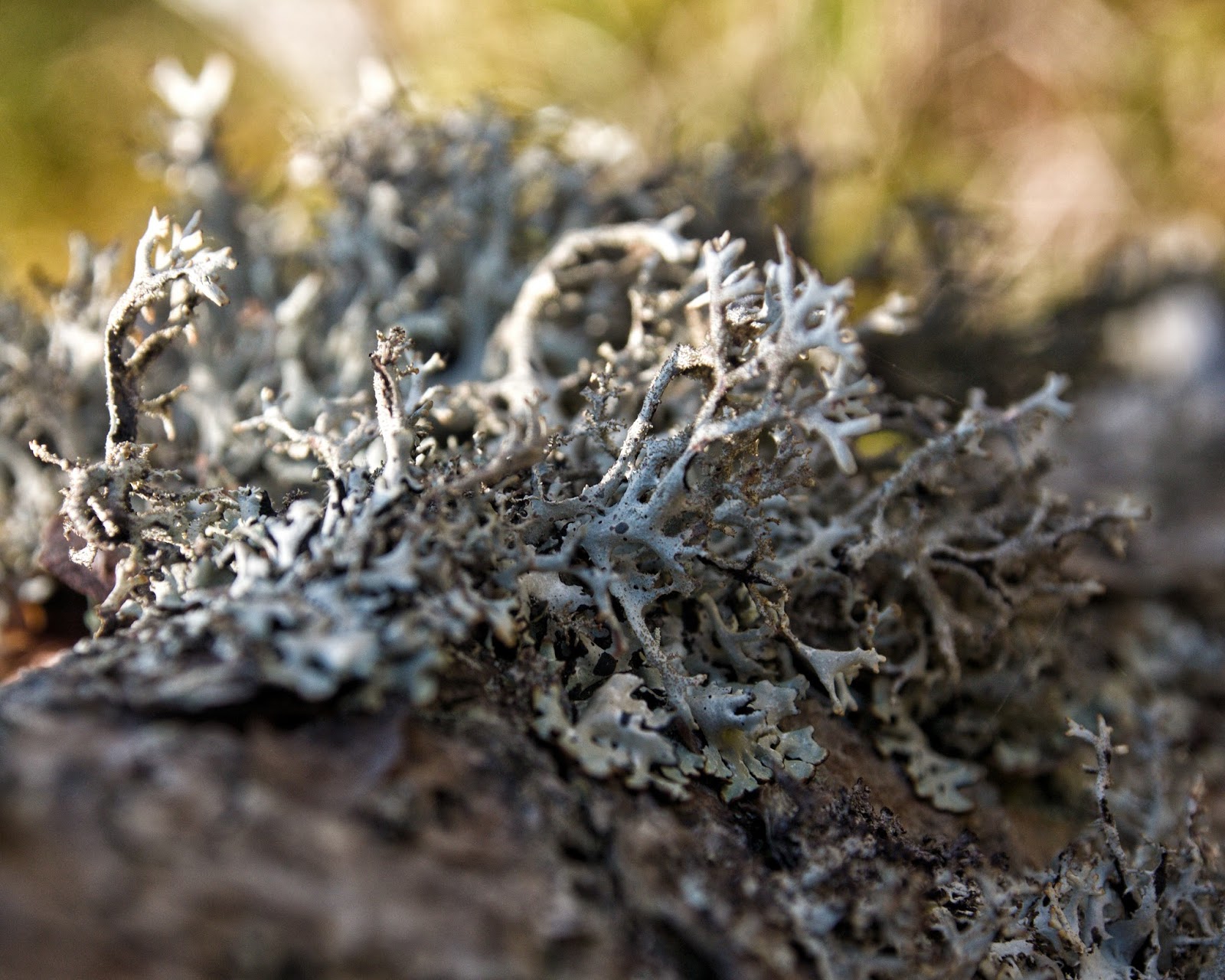
Because of the wet, acidic conditions in the Bog (or is it 'on' the Bog? Whatever...) any trees which get a foot hold are stunted and sparse, rarely growing very large, setting the area apart from the mature. high canopy forest surrounding it. Many die young and eventually fall, but the unique soil water chemistry created by the antiseptic, acidic qualities of the sphagnum means that they never really rot. Indeed that is how peat is formed, organic matter accumulates year after year, not able to decompose due to those unique chemical conditions. The successful vegetation is therefore pretty specialised; carnivorous Sundews, Bog Rosemary and dwarf shrubs. Lichens coat the trees in the clear air away from major industrialisation.


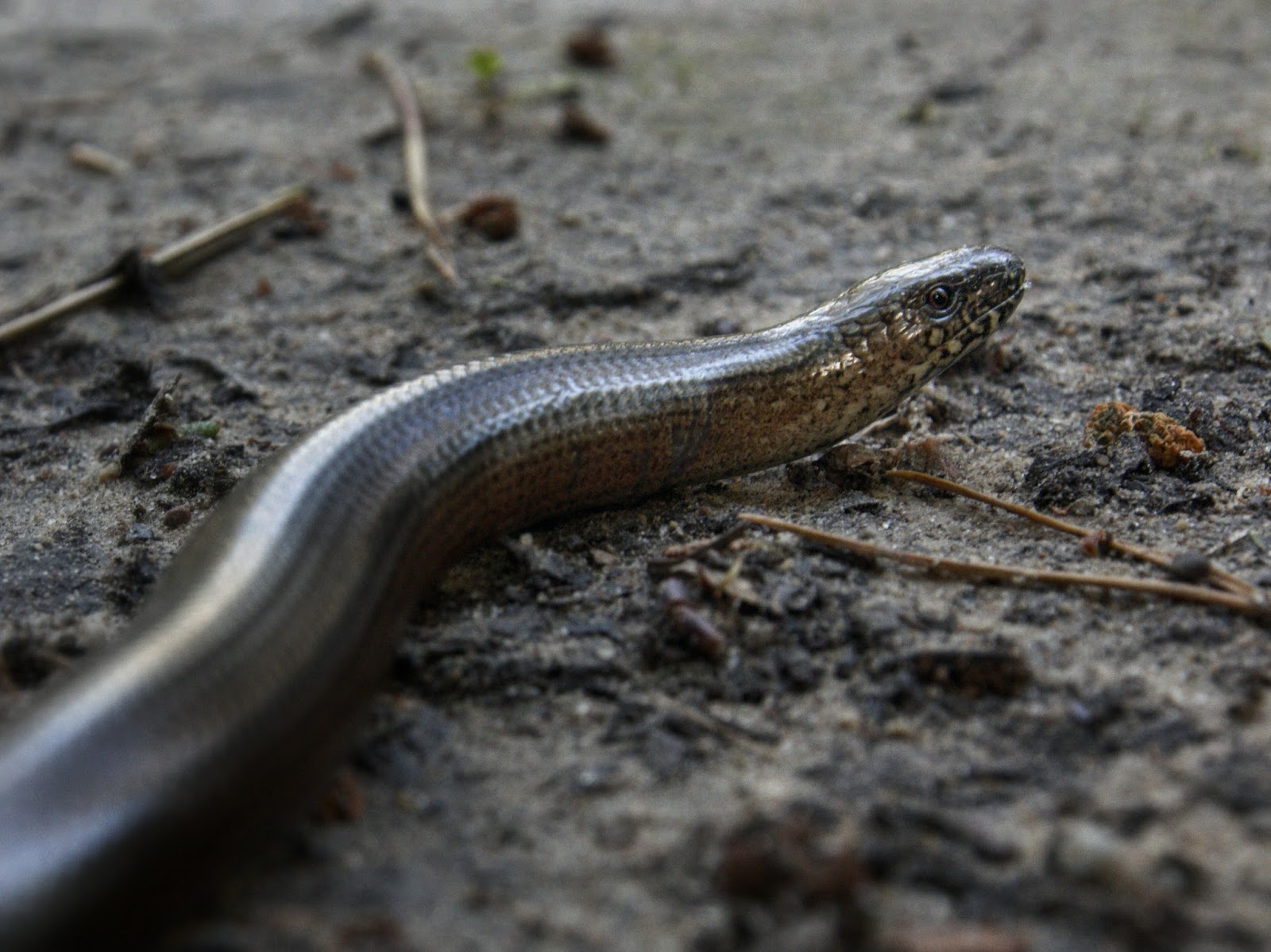
The boardwalk meanders for 3.5km across the bog, but encroaches on only a tiny portion of the whole area - it is vast! As I walked, lizards basking on the warm wood darted off, butterflies looped lazily in the sun while the raptors of the insect world, dragonflies, hunted smaller insect prey. It wasn't until I got to the observation tower at the furthest point of the loop that I was able to get a true sense of the scale of the place - phenomenal! If I hadn't needed to rush back to catch my train I could happily have spent a lot longer, but despite the time constraints I thoroughly enjoyed my visit. I even did my good deed for the day on the return journey, encouraging a frog and a slow worm to safety, when they both seemed determined to become road kill!

When I got back to Riga I walked the streets for an hour or so, familiarising myself a little with the city, and locating something to eat. This was interesting but to be honest, I was more comfortable and interested miles from a paved road on the Bog than I was in the city.


The conference started the next day, and we listened to a whole day of interesting and informative presentations about the conservation and restoration efforts going into wetland habitats stretching from the UK to Russia, and pretty much everywhere in between. These were very educational and encouraging in many instances, but a little disheartening too, hearing both the successes but also the struggles of these organisations to deliver their goals of a healthy natural environment. But, it was a long day in a university lecture theatre - reminiscent of my years of study which now seem a long way behind me! It was the field visits the following day that I was waiting for.


First we visited a restored site; formally milled for peat (harvested believe it or not for pig bedding... I know, thats what I thought too) now reclaimed for nature and turned into a flourishing wetland. It was interesting, the dragonflies were plentiful (always a bonus for me - I love dragonflies!) but otherwise the diversity of species was a little disappointing. I'm used to large expanses of water having birds, usually lots of birds; ducks, geese, gulls, swans, something at least. Here I saw very little bird life, which took me by surprise. At Kemeri Bog a few days before I had noticed the same thing. I saw a few pied wagtails and a pair of Woodchat Shrike - which was great, only seen one before and that was in Spain - but that was it. Back home, I see more birds than that in my tiny, suburban garden.


Next on the itinerary was what I had really been waiting for, another raised bog, Sudas-Zviedru Mire (say that three times fast, but don't ask me how to pronounce it because I can't remember) in the Gauja National Park. These raised bogs were the highlight of the trip for me, hands down. Both Kemeri and this one were eye opening - illustrating just how how much we have lost of our 'wild space' in the UK. So many of the places I had previously viewed as wilderness suddenly seemed pretty tame, and modified and ... just sad. Reserves I thought of as reasonably large started to look puny - this was just one of many similar sites and had at least two extra 0's on the end in terms of the land area.  


This time there was no boardwalk, we waded (I think that might be the most appropriate term) out through the saturated Sphagnum. Out among the bog pools and stunted trees, we listened to presentations on subjects including the original formation of these habitats, water chemistry, species diversity, ongoing conservation efforts and more, all through radio ear pieces which allowed me to keep listening while engrossed in photographing dragonflies and interesting plants (possibly the best field visit ever!? - who said men can't multi-task!), and trying not to fall into the bog pools.


The weather had been threatening rain with a vengeance for a while and as we were preparing to leave it delivered. Still, it seemed an appropriate end to the trip, as without that rain fall where would the bogs be? Certainly not wet enough to entirely soak my boots which, despite several sessions with the hotel hairdryer, were still soaked through when I repacked my luggage and headed for home early the next morning. All in all, it was a great trip, which I thoroughly enjoyed and learned a lot from. I hope there will be a next time as I only scratched the surface of what Latvia has to offer, and if what I saw is anything to go by, it has a LOT to offer if your at all interested in the natural world.

Richard 

To see all these images and more from my trip to Latvia take a look here at the Flickr album, or take a look at my Instagram @wildguyphoto.

Sunday, 10 September 2017

Sunset Paddle

(**I've got a bit of catching up to do on these blog post subjects, this one's from early August**)

We hadn't intended to be paddling at sunset specifically, but we both really wanted to put our new toys to the test. It is my wife's fault really - in the best possible way - she started it at any rate. 

You see Emily brought me a canoe for Fathers day, a budget, inflatable one, but a canoe none the less, and it was, and still is, brilliant. (Proving the rule that 'You don't need to spend a lot of money to have a lot of fun!'). We had christened it with style, at a canoe slalom course not far from home. The children had loved it and I was beyond enthusiastic to be able to add a new dimension to future adventures - I've wanted something like this for a while. 

I'm no expert paddler, but I've played around with canoes / kayaks a few times and my limited skill was sufficient to generate almost limitless fun (in the children's eyes, and mine). Obviously this needed to feature highly in the upcoming summer holiday plans. When visiting my parents in the Fen's of Cambridgeshire it made an extended outing on the river near St Ives. During this trip it carried various members of my family and only capsized once - the accolade for that achievement goes to my Dad - love you Dad! 

Les heading for Europe!

The photo's from this trip leave something to be desired - I didn't have the guts to take my 'proper' camera out on the canoe in case something happened so I just took my phone in a plastic bag. What I need is a proper water-proof rugged camera. If Olympus UK are reading this I will happily accept a TG-5 or a Tracker or both to review on my next watery adventure. Just saying...

We then made the short hop across to the Suffolk coast where Emily's family live. And so, naturally, we put it out to sea, although not very far out. There was a stiff off-shore breeze and as I didn't have my passport with me I didn't fancy a trip across to the Netherlands! We spent an enjoyable hour or two with Megan enjoying her very first attempt at paddling. This wasn't the end of our water-based holiday fun though - at least not mine.

Megan and I come back to terra firma after an enjoyable paddle. 

In the run up to the holiday Emily's brother (Les) had also acquired a couple of inflatable canoes, but not had a chance to try them out before we came down for our visit. We put our heads together at a friends wedding and planned an outing for later that evening to have a micro-adventure of sorts. After various versions of a plan we settled on something a little more realistic than initially suggested (I was a possibly a bit too keen...) and a few hours later we met, threw my canoe in his van and drove the 10 mins to the tiny coastal hamlet of Shingle Street, at the pointy end of Orford Ness. 

We quickly got suited and booted, (more like 'buoyancy-aided and de-booted') and out onto the water. The off-shore breeze of the day before was gone and with it my reluctance to leave the shelter of the shingle bank. So we glided out onto a mill-pond smooth North Sea beneath a stunningly clear, blue evening sky. We paddled out to a buoy marking the safe entrance to the River Alde, which flows parallel to the sea but protected behind the fascinating natural barrier of Orford Ness. We pushed up river for a bit, following a yacht which left us far behind as it smoothly headed for the distant Orford Castle just visible up river. The going was slow but easy, with little if any perceivable current at this point, but the tide was turning.

Exploring the side channel on our way back with an amazing water colour sky. 

It was beautifully warm and calm. We cruised past wading birds foraging on the muddy shore and were over-flown by groups of others on route to an evening roost. This didn't come as much of a surprise of course as we were only a short way, as the Avocet flies, from the RSPB's Havergate Island Reserve. Having both visited the island reserve on an official tour, and been around it on a fishing boat out from Orford I would recommend a visit for anyone who enjoys a peaceful spot of wildlife watching.

Before we tucked behind the shingle spit of Orford Ness we had an uninterrupted ocean view to the east with nothing but a few distant boats to suggest the civilised world extended in that direction. Back to the west, out of sight over the bank stretched acres of salt-marsh, patiently waiting for the next inundation, then the fields, heathland and quiet villages which makes up the Suffolk Coast and Heaths Area of Outstanding Natural Beauty (AONB). On an evening like this it certainly lives up to its title! 

The sun was now getting properly low in the sky. Knowing that the tide would start coming in soon, and that we'd be paddling against it, we turned for home after a brief stop on 'the Ness' to re-inflate one of my canoes inflatable cells (it had decided to develop a slow leak). We hadn't gone far back towards our start point when the incoming tide really picked up the pace. I was very quickly reminded just how good canoeing can be as an arm workout! We weren't making much progress but with a stunning sky to watch it wasn't exactly a hardship. We weren't in any danger, apart from the embarrassment of a long walk!

In the hope of an easy escape we explored a side channel briefly, knowing that several of them took us back towards the car park, but quickly ran out of depth. Several Oyster Catchers watched us come, turn and go - having soft mud just beneath the surface of the water certainly wasn't an issue for them! In the end we dragged our canoes out and walked them back to the car along the shingle which gives Shingle Street its name (I assume). The combination of falling light and rising tide beat us fair and square, but what an evening. 

Beautiful weather + beautiful location + beautiful sunset + 
good company + good exercise = Excellent Adventure.  

Next time I think we'll plan to come down the river... with the tide!

Richard

P.S. - As it happens, there has already been a 'next time', albeit on a different river. That's the issue with being tardy at blog writing, that account will have to wait for another day.