Showing posts with label Scotland. Show all posts

Saturday, 4 January 2020

Looking forward by looking back. Thanks 2019.

A highlight of the year - our family holiday to the Isle of Skye. This was at Loch Coruisk 

Each New Year is an opportunity to consider whether you made the most of the one before, whether you used your time wisely, your opportunities to the full. 

I'll be honest, 2019 was good, but it could have been better. If I had used my time better, and stuck to my priorities without being distracted by less important calls on my time and attention, I'd have fitted in more quality time with my family (which should always be my number 1 priority), and more time enjoying and learning about the great outdoors. 

I shared some goals this time last year (see those here) for some noteworthy trips and challenges. Not all of them worked out, but I managed many of them, and added quite a lot more. The biggest omission was probably not being able to walk the route of Hadrian's Wall, a long held goal - in the end I just couldn't take off the time it would have required at the time of year I had intended to walk it. But its been there for 2000 years, I doubt it's going anywhere anytime soon. There will be another chance. 

Some of the 'adventures' have already featured in the blog, others haven't ... yet. There is another goal for this year, to make more of this blog. The posts may well be shorter to enable them to be more frequent but I can live with that. 

There was the trip to Wales with my brothers in February - that was a lot of fun and a rare opportunity to get time with my siblings. There was the family reunion to southern Scotland in April with my mothers side of the family, then the trip to the Isle of Skye with just our little family in early May. Good thing Scotland never gets old, in fact it seems to get better and better with every visit. There were family visits to the beach, a short trip over to Wales with one of my brothers for a last Hurrah before he went to live abroad for two years as a volunteer missionary for our Church. There were family days out in the Peak District in Autumn colours, and on winter days to see water falls. 

And in looking back on all that I think, 'Yea, we did alright'. But in looking back to what happened in between those adventures, large and small, the lost days because we got up late, or had jobs to do which I could have done the night before if I had foregone the telly. Or the evenings when I could have done something to earn a bit of extra pocket money to pay for a slightly more interesting adventure than I ended up doing... I think you can see the pattern. 

As such, I am not going to make specific 'resolutions', rather my goal for the year is to make better use of my time. Less TV, less social media, less lounging around, less late nights not really staying up for anything except to just stay up. More reading real books, more writing blogs or articles or books (I have a long list I'd like to write), more time facilitating adventures. 

And I use facilitating instead of planning because 'planning adventures' way too frequently turns into scrolling through Instagram looking at the latest fad for "influencers" and "content creators" to head to the same exotic place and take very similar photos of very similar places. And actually, that's not what I want. I want my own adventures, not someone else's left overs. 

By facilitating I mean more than dreaming or wishing, I mean really planning. Studying maps, setting routes, identifying potential wild camping sites, understanding travel requirements, finding the buses / trains / planes I will need to get there, understanding the likely cost of the travel, taking that into account in my adventure budget, understanding what time of year will be best based on what I want to see / peak season higher prices / weather conditions and so on, considering what equipment I will need based on where, when and what I will be doing - not just the latest cool must have gadget, but the items I will actually need to undertake the trip (which I am very grateful to say for me is a relatively short list these days, unless something has worn out or broken, or I am really pushing my comfort zone!), adding those needs into my adventure budget, then planning how I will save or make the money needed to hit that budget in time to achieve the goal, then making the money stretch by buying second hand or last season (because who cares if the colour palette doesn't match the latest catalogue), honestly assessing my fitness or capability levels and determining whether practice / training or formal instruction is required to get me physically ready for the endeavour, then setting a training plan to get me ready, following that plan, tweaking the route, checking the kit, practice packing it all in to make sure it fits, some demo journeys to see if I actually need everything I packed ... oh, and then actually going on the trip I suppose. 

Phew, that sounds like enough to keep me busy. 

So, goodbye 2019, thanks for the fun times, and thanks for the reminder than I can accomplish way more when I put my mind to it than we did together - my fault, not yours. 

Now then, 2020 - lets see what we can manage when we put our minds to it!

See you out there,

Richard     

Thursday, 14 February 2019

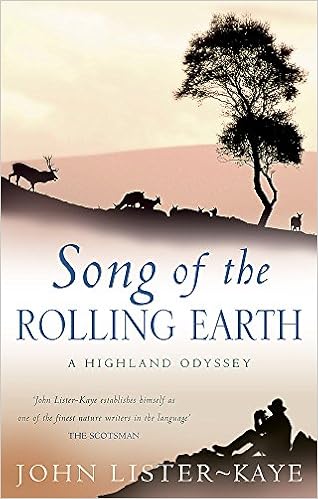
The Best Books: John Lister-Kaye - Song of the Rolling Earth

Image result for song of the rolling earth cover imageOK, so I will start this review by being honest - I finished this book over 6 months ago and forgot to write about it at the time. Now, I can't remember quite as much about it, which puts a bit of a damper on writing a review about it. But, one thing I remember very clearly is that you should read it. Anyone who has any interest at all in natural history, British wildlife, Scotland - including its cultural history, conservation, success stories, family life, adventure, wilderness or the peace and tranquillity of wild places will enjoy this book. Especially Scotland.

I remember that it doesn't read as if he set out to write a book, rather that he spent a long time living life to the full and in looking back realised that other people may find it interesting. And I for one certainly did. I liked it enough that I immediately bought another of his books and will continue to add his works to my collection as pocket money, shelf space and the seemingly never-dwindling back log of books to read permits.

I had long been aware of the Aigas Field Centre, though pretty sure I've been mispronouncing it the entire time, so thought when I first heard of this book that it would be an interesting read. But it is so much more than simply the story of how the Field Centre came to be - it is the story of someone who had a dream and, having worked their socks off for it, achieved it and a whole lot more besides. And for that I commend Sir John.

One story which I remember more clearly than many of the others which have faded (this is certainly a book I would read again to sharpen those memories) is the account of a boat trip down a river with his young daughter where they came face to face with an otter while resting on the bank - what a experience. I took it as a reminder to me that the ideas and plans I have for my daughter (and son when he is a bit older) to join in my 'adventuring' and ongoing learning about the natural world and its pleasures and intricacies don't have to be pie-in-the-sky. They really can happen and they really can make a difference - I just have to make the effort to get them off the ground.

Reading Song of the Rolling Earth while waiting in
my tent for dinner to cook on Vatersay in the Outer
Hebrides, Scotland. 
 
While I have taken many things away from this book - an even greater love of Scotland, an admiration of Sir John and the power of working towards your dreams despite opposition and discouragement, an increased sense of humility that I have been born in an age and in a place where I really have had it easy to name just a few examples - perhaps the greatest lesson I will cling to is that dreams come true in Scotland... and perhaps other places too.

I'm glad I got to read at least a portion of this book while in Scotland myself. Walking and wild camping around an Island in the Outer Hebrides which still hosts the crofts and small rural communities which are described to some extent in the book. That trip was in itself a dream come true for me. A dream probably 15 years in the making and it lived up to the expectation and anticipation that had been accumulating over that time.

In conclusion I would propose that the "Song of the Rolling Earth" Sir John describes throughout this book is the soundtrack of dreamers. OK, that was a bit flowery, just read the book already.

Richard

Wednesday, 14 November 2018

Barra (Part 2)

This has been partial written for a while - finally finished it.

I love the routine of waking up in a tent. There are usually a few seconds of semi-consciousness before
I remember where I am, why the ceiling is so close and why it is moving. Then it all comes back and I
unzip the outside world and let the morning in. The famous adage that 'you only get one chance to make
a first impression' absolutely applies to this moment each and every day of each and every camping trip.


Of course first impressions can be misleading. Waking up after my first night on Barra I took a brief look
outside, promptly re-zipped the door and went back to sleep. I needed it, I hadn't slept well. Although I was
awake enough to notice I was feeling much better than I had the night before - thankfully. My alarm had
been set to wake me up before sunrise, to make the most of any photographic opportunities it may have
afforded. After all it isn't ridiculously early at that time of year. But the combination of extensive grey cloud
and the aspect of my campground meant there was little to be gained from such an endeavour, and the
chill air which invaded my tent during my brief reconnoitre made me appreciate the warmth of my sleeping
bag even more. I dozed for another hour or so, with my first impression of the day distinctly mediocre. At
least it wasn't raining anymore, silver linings and all that.   

But the British weather is fickle. My first impressions were misleading and by the time I peeked out again
the clouds had blown over and the sky was well on its way to a cloudless, brilliant blue. I scolded myself
for indulging my sleepiness. The sun, though not yet high enough to shine down into the valley where I had
slept, was strong and bright on the hills of Vatersay which filled the horizon to the south. They were my goal
for that day and what a goal they looked!.

Despite the sunshine hinting at relative warmth to come, it was a cold morning in my shady valley. I wrapped
up warm (my Buffalo Mountain Smock was worth more than its weight in gold on this trip) and made hot
chocolate in the lee of a large boulder. Wanting to leave my tent pitched until the sun rose high enough to
dry the remnants of the rain and dew off, I took my camera and explored the little cove I had camped above.
In the rush and the rain of my first day my camera had sat idle for much of the day. I wanted to make up for
lost time today. The rocky cove presented all sorts of visually pleasing scenes from the colourfully striated
rocks to the long, but quickly shortening shadows cast onto pristine sand by lonely boulders.


I say pristine sand, but sadly, despite the tangible isolation of these islands, they were still not immune from
the now commonly discussed plague of ocean plastic. Bits of rope, plastic containers, nuggets of polystyrene
long smoothed through years (or more) of being tumbled in the surf - all were present on 'my' little beach,
perhaps in lesser numbers than mainland beaches further south, but plentiful enough.

With the sun now well up I packed the good-as-dry tent and set off up the hill on the start of my frustrating
loop back around to the road (see Part 1). I was feeling much better than the previous day; my stomach
was no longer engaged in abdominal acrobatics and with a good breakfast inside me I was raring to go,
although some of the aches made for a moderate rather than brisk pace! As I got higher the views expanded
around me until I crested the ridge I was crossing and the whole of the sound between Barra and Vatersay
was opened to my view. The fishing fleet in the distance was active already - the first boat of the day had
chugged out westward past my camp ground shortly before I left it. From my distant vantage point the fleet
on the calm water bordered by the sinuous coastline appeared like a flotilla of toy boats in a park pond.


On my back down to sea level I passed the site of an ancient settlement tucked into the side of stream
valley, the subject of an archaeological excavation several decades earlier. I considered what life may
have been like for these early islanders. The coastline was just meters away, presumably their primary
source of nourishment. The peat of the moorland I had just crossed would have provided their fuel.
Doubtless the high ground I had just descended from would have acted as a good look out point, whether
looking for family and friends returning from a fishing trip, or keeping an eye for less friendly visitors. I
reckon I could have managed that life for a bit! Bleak and lonely winters though, I would hazard a guess.


My contemplation and accompanying rest over, I did something those early settlers could only have dreamed
of - I walked to Vatersay across the recent (relatively speaking) causeway.


It was about this time that I seriously considered pinching myself. The combination of the weather (stunning),
the location (breath taking), and the opportunity to explore it all for a few days was very literally the stuff
of dreams. Crossing a small stream at the apex of a coastal inlet I noticed half a dozen seals playing in the
water - they saw me as I saw them, and watched me as I followed the road south east. So I stopped and
watched them back for a bit - there aren’t many seals in Stoke-on-Trent after all.

A car pulled up as I prepared to move on. On rejoining the road I was heartily greeted by a local man out
to stretch his legs. We chatted for over half an hour while the seals continuing their play in the bay. He was
generous with his local knowledge and as welcoming as anyone could ask for. He answered many of the
questions which had been forming over the 24 hours that I had been on the island, and I found my new friend
to be both open and honest. He welcomed the tourists (like me) but was saddened and frustrated by a
lack of respect for his island which many of them exhibited, a sadness and frustration which I immediately
shared.   

A parting impression was that I had timed my trip well - given the choice my islander acquaintance would
take the winter rains and wind over the midges which plague the island in the summer. My trip hadn’t only
coincided with the last cheap flights before prices rise for the high season, but also some of the first ‘good
weather’ of the year - and not a midge in sight! Good is relative of course, it was pretty cold. I’d been wrapped
up, and with the miles I’d covered had been warming myself pretty effectively too, so I suppose I hadn’t
really thought much about it. But as the road continued east and rose a little above the shore line I could
see back towards the mainland of Scotland and the inner Hebridean islands - there were snow covered
peaks! I shouldn’t have been surprised I suppose, the forecast had suggested snow for the highlands, and
the morning before in Glasgow there had been a dusting on the surrounding hills.

The backdrop of snowy mountains and the rocky bays and inlets in my foreground gave a feel of landscapes
much further north, perhaps Canada or Fjord-land. But then my focus was distracted from the far distance,
because an Eagle was flying toward me! It was way up there, riding the late morning coastal thermals
against the bright blue sky, a distant silhouette. But what else is that big!? I was torn - binoculars or camera?
I settled on camera which meant a hasty lens swap was required. By the time I’d got my telephoto attached
the eagle had cruised directly above me towards the high moorland to the south of the road. I took a couple
of photo’s but they were never more than a proof to myself than I didn’t imagine it. I regretted going for
the camera as it disappeared behind the ridge; why couldn’t I have just enjoyed the moment? Nevertheless,
I had seen my first ever eagle - it was a noteworthy occurrence, and one which would prompt a change
of route a little later.


While feeling much better than yesterday I was still a little below par and not particularly happy with the pace
I was able to manage as I passed a view over the very literally named Castlebay, the main town of Barra
(more on that later) and the road doubled back on itself to head towards Vatersay's back-to-back beaches
and main village. A view point at the site of a World War II plane crash gave me another opportunity to
contemplate and enjoy the sunshine (obviously resting my legs was only a secondary consideration) before
pressing on for the last stretch to the beaches.


Few roads I’ve walked (or driven for that matter) reveal a better view than this one offers to its diligent
traveller. As it rises and turns a strip of white is unveiled, a strip tenaciously keeping the turquoise sea
at bay, backed up by a rear guard of dunes standing in readiness. Not since I lived on Caribbean islands
for a year have a seen water that colour. I’ve heard Barra referred to as ‘Barrabados’ and this view easily
justified that nickname! (It was Trinidad and Tobago by the way - and they are lovely).

My initial plan had been to go the southern extreme of the island, but consulting the map I decided that as
I didn’t have a kayak with me - darn those luggage restrictions - there wasn’t much to be gained from that
plan (that’s for another trip!). My new plan was height, as much of it as I could manage. But first it was lunch
time so I kicked back in the dunes between the two beaches and actually dozed off for a few minutes on
the short, rabbit nibbled turf in the warmth of the noon sun.  


Refreshed from lunch and a snooze I headed up, straight up to the highest point of the island. And what a
view wanted for me up there. The sun was starting to sink by this point, but still plenty high enough to highl
ight the stunning beauty of this island landscape. This was the ridge I had seen the eagle disappear over
earlier, and I had harboured at least a distance hope that I might see it again, but it wasn’t to be. The hills
themselves were a fascinating blend of stony outcrops and sodden peat bogs, not an ideal camp ground
especially when you throw in the bitterly cold and furious wind which blew consistently over its summit.


Deciding that there was room for comfort and a good night sleep as well as adventure on this trip, I descended
the hill to find a more sheltered campground. Preferably one close enough to the beach to enjoy the sunset
that looked like it was going to be pretty special. I hoped to find something suitable but I found something
better - probably one of the best wild camping spots I've ever had the pleasure of utilising. It overlooked
a white sandy beach dotted with black rocks, facing west, with the wide open horizon of the North Atlantic,
unbroken now until Iceland pounding waves energetically onto the shore. The grass was short, the soil
sandy and dry, and a natural berm provided a windbreak for my little tent to nestle under.

I'd allowed myself a relatively early night - I was there for fun after all - and settled down on the grassy rim
of the beach with a hot meal and a book to watch the sun go down - now that is the way to spend an evening.
After the views I had enjoyed during the day the sunset was a little disappointing to be honest, albeit
enhanced by the drama of the crashing waves on the dark rocks - but by then my standards of scenery had
been raised to a new level! I waited up long enough to see the stars come out before turning in to my warm
sleeping bag. I slept well that night, very well.

Final instalment coming soon!

Richard

Friday, 23 March 2018

Looking North for an upcoming adventure


During the daily grind when my mind wanders, and I have to admit it often does, it most frequently heads North.

Not always - the wide open spaces of Africa with it's diverse (and large!) wildlife; the mountains of Corsica and the GR20 long distance trail I've wanted to hike since I was teenager; the blue waters, exotic fruits and tropical forests of the Caribbean; New Zealand, the European Alps, the Atlas Mountains, the Amazon Rainforest... I'll stop there, you get the point, I mentally wander south sometimes too.

But most often it's North. Landing on a high mountain lake in Alaska in a De Havilland Beaver float plane; watching the Northern Lights dancing over the snow covered forests in Arctic Sweden; and very, very often its Scotland.

I first visited Scotland as a 17 year old - I worked on an RSPB reserve on the edge of the Cairngorms National Park for a week (as a volunteer) as part of my Gold Duke of Edinburgh Award. That week introduced me to a stunningly beautiful country which I have visited relatively often since, but no where near as often as I would like. There is still a lot I would like to explore and experience - luckily I've got a good few years to keep exploring and my wife loves Scotland too!

That trip almost 13 years ago also introduced me to the idea that working in the conservation industry wouldn't be such a bad way to make a living - a pivotal moment in many ways. But at that time my career aspirations lay elsewhere - to be entirely specific they lay a hundred miles or so west, flying small commercial passenger planes around the islands of the west coast of Scotland - that was my dream job. When the time came a commercial pilots licence was a cost I just couldn't justify and I followed my back up plan, went to university and now work in conservation.

But in just over a weeks time I will be fulfilling a small part of that 15 plus year old dream and flying onto a small Scottish island - Barra - in one of those very same small commercial passenger planes where I will land on a beach (the only commercial airport in the world which operates from a beach - yes really!). I won't be the pilot of course, sadly, but this is still a whole lot closer to that dream than nothing! 

Barra is the most southerly inhabited island in the Outer Hebrides island chain, and just 10 miles north to south, and 7.5 miles east to west. Small enough to explore by foot over the course of the 3 days I'll be spending there. I'll be camping during my visit so I've got my fingers crossed that the Beast from the East Part 3 doesn't bring a quite the cold snap that some reports are suggesting! I also need to go through my gear and thin it out a bit to meet the baggage allowance for the flight in.

I'll leave that kit discussion for another time. For now you may have gathered that I am pretty excited for my upcoming trip! And you can be certain in the knowledge that you will hear more about it on here in due course.

Richard 

Wednesday, 24 January 2018

Wild Moments: The UK Cat Conundrum

** 'Wild Moments' posts are going to be a new thing for me in 2018 and will be 
mini-posts (perhaps written during a lunch break) on pretty much anything (relevant 
to the things I write about) which has caught my eye. There is a risk they will 
contain opinions (insert dramatic music here), but I hope they will mostly be 
balanced and well considered and maybe even educational - I live in hope! **

Wild cats in the UK. A divisive but popular topic at the minute and something which has been bugging me for a while. 

The debates on this subject at present focus on the very high profile and quite popular (in some circles) campaign to re-introduce Lynx to the UK. I've read quite a lot of material, from both sides of the argument - although I think there are more than 2 sides to this particular argument to be honest. I've even gone back to cited source material and read scientific papers about other reintroduction schemes else where in Europe to get the true context of the claims being made. I love the natural history of the British Isles and anything which aims to preserve or enhance the 'wildness' of my home countries is as far as I am considered a worthy venture. Further more as an adventurous sort of chap I would welcome the chance to catch of a glimpse of a lynx or for that matter a bear, or wolves or a moose wild in the UK.  

BUT - I do not agree with the sentiment below. It is not time to bring them home... not yet.

Image result for lynx reintroduction

The reason for this is nothing to do with the issues surrounding predation of livestock (although I think this a valid concern which I do not think is being taken seriously enough by those advocating the reintroduction). Nor is it due to concerns about the plans, locations (although I was staggered that Thetford Forest was considered as an option! I'm glad that was withdrawn from the final proposals) or poor attempts at cooperation with 'the other side' - the farming community.

It isn't even to do with a certain level of naivety which I feel has been displayed at various levels of the campaign - my biggest bug bear of which was what seemed to me like a deep seated lack of understanding of the importance of range sizes, population densities and the importance of a genetically sustainable population, but which also included the closed minded disregard of the potential threat, however small they deem it to be, to other peoples livelihoods. 

No, the reason I am against it is that while all this effort (and money!) is being poured into the proposed reintroduction of a species which we as a civilization have already failed, we are STILL failing its closest surviving relative in the UK - the Scottish Wildcat. Depending on which report you read (or believe) there are as few as 25 pure Wildcats left (now solely in Scotland) of a species which used to be far more wide spread throughout the UK. And the story is very similar to that of the Lynx - persecuted as a perceived threat to what is deemed more important. Of course with the Wildcat you also have the added complication and threat of hybridization from domestic cats which are allowed to roam free. Yet another example of humans ability to ignore the consequences of their actions and 'we've been doing it for years and we'll keep doing it'.

So there you have it, my reason for not currently supporting the Lynx reintroduction campaign is that I would much, MUCH rather see the vast expense that will inevitably be poured into the plans if they go ahead go into the pre-existing efforts into saving the wild cat we still have, because otherwise we will be in a position where we've lost that too!

Image result for Scottish wild cat conservation

Richard

Monday, 30 October 2017

Archive: Rivers - Supermarket, Highway, Inspiration

** I'm cheating a bit here - It's been a busy few weeks and I haven't had a chance to 
write any new blog posts, although there is stuff to write about! To keep material 
coming I thought I'd share this blog post from a blog I contribute to occasionally, 
originally written a few years back it is still as relevant now as when I wrote it. **

When I am out and about, whether it be for a gentle countryside walk with my family, a solo adventure, dedicated photography trip or a foraging session, I am always drawn to certain features in the landscape . Rivers are one of those features, particular smaller rivers in deep cut, wooded valleys. There is something about these valleys that never gets old to me. As a teenager on the North Devon coast I had plenty of opportunities to explore these sort of valleys, including in and around Exmoor, to this day one of my favourite parts of the UK. 

Me, contemplating life alongside the River Spey in Scotland.  
You may ask why, and I don't really know the definitive answer to that question but I have a few ideas. The first revolves around the concept of mental maps (something I had written about previously and will probably do so again for this blog), particularly resource maps. Rivers are a phenomenally rich resource (I originally wrote this for a bushcraft blog - www.bushcrafteducation.co.uk - and so it was originally aimed at foraging and that sort of topic):

First and foremost they are a readily available source of water. In the higher reaches of rivers where they run fast and clear it is also likely to be clean water which you can drink straight from the river. Even these days in areas where agricultural run off may have sullied the water, or in its lower reaches where it runs slow and silty, with simple techniques it can be filtered and purified to be made safe to drink.

They were to our hunter-gatherer ancestors an important source of protein, and still are today albeit one which is far less used than it once would have been, in the shape of water birds*, fish* and crayfish (although sadly these days an invasive species, the American Signal Crayfish which has driven our native White-clawed Crayfish to the edge of extinction). If you know where to look there may also be freshwater mussels or as you get closer to the coast and into the brackish and tidal zones of the river there may be other salt-water shellfish to harvest. 

With a constant source of water and, further down the river at least, nutrient rich silts, river valleys are often a great source of plant food as well. To name a few, wetland areas associated with rivers are often home to sedges (Carex spp.), some of which have seeds which can be eaten; Bulrush or Greater Reedmace (Typha latifolia) can be found which has edible rhizomes as well as being a useful tinder. These days in the UK several very common edible plants found along rivers are non-native species, certainly not something our hunter-gatherer forebears would have been familiar with - Himalayan Balsam (Impatiens glandulifera) and Japanese Knotweed (Fallopia japonica). And by eating either of these you are also doing your bit for conservation by reducing the population of an invasive plant. 

Some of the trees often found in close association with water are Willow species. Willow is an extremely useful plant to a bushcrafter providing bark for cordage & withies for basket making. In addition its bark contains Salicylic acid (in fact 'Salicylic' is derived from Salix, the Latin name for the Willow family) which is a component of aspirin and it has been known for centuries that chewing on willow bark could ease aches and pains and reduce fevers. 

Having established that rivers are useful for resources I think that part of my fondness for rivers stems from an instinctive draw to a landscape feature which is of use to me. But I don't think that's the whole story. 
Rivers are also beneficial for moving through the landscape. In a very modern sense we can see this based on how many roads or railway lines follow the course of rivers. In many circumstances the river bed itself will be the path through a landscape which experiences the least severe changes in elevation - waterfalls being a fairly obvious exception! By following these ready made paths modern engineers have saved themselves time and effort but also created for themselves different issues by placing their projects in the path of an immense erosive power - but that's another story.

I don't think this benefit would have been unappreciated by the people who roamed the land when roads weren't even a futuristic dream. Especially during the summer, when vegetation was at its highest and most impenetrable, and the water level was lower likely exposing a portion of the river bed, using these natural routes to move inland from the coast or the opposite would have saved effort and ensured that food to fuel your travels was never far away. Certainly in dense woodland I have followed small rivers or streams, sometimes alongside them and sometimes by necessity in them to aid my movements and help me to move more quickly or easily. It has long been a goal of mine to follow a river from its source to the sea - I think it would be a fascinating journey! 

In all this I have skirted around the potential of travel on the water itself. While not a expert in water travel I have been lucky enough to do a bit of kayaking and rafting both on rivers and the sea and it is a great way to travel. Early inhabitants of the UK may not have cashed in on this opportunity as much as those in other parts of the world, the effort required to manufacture water-borne vessels perhaps outweighing the advantages in many situations on a relatively small island. It is however well documented that early civilisations in other parts of the world focused their travel on waterways with variations on the theme of dug out canoes and later in the northern hemisphere with bark canoes. 

If you are referring back to the title you'll notice we are two thirds of the way through this tale. There will be those who read 'inspiration' in relation to 'river' and think I have lost it - city folks perhaps for whom rivers are places for stolen bikes and shopping trolleys, pollution outflows and perhaps if your lucky, the odd gull or duck. Luckily in Britain today even this inner city image of rivers is largely a thing of the past with tighter controls on pollution and water cleanliness but still the Thames in London or the Mersey in Liverpool are not the sort of rivers I look to for inspiration. 

The picture that comes to my mind when I think of inspiring rivers is a small river, wooded valley sides rising steeply above, clear water trickling quickly through a jumble of moss-covered rocks and woody debris. A Dipper rushing past or watching you from a half-submerged rock. Perhaps a little further downstream a whistle and a flash of blue alerting you to what has got to be the UK's most colourful bird, the Kingfisher, going about its business. If you're lucky some muddy footprints indicate a Otter isn't far away, and if your even luckier a glimpse of these now thankfully returning mammals. In the early morning mist a Roe deer perhaps, tentatively crossing from its shelter on one side to prime feeding ground on the other. As the sun gets higher, the dragonflies, the birds of prey of the insect world start to come to life. I could watch their aerial battles for territory and bright colours for hours before I got even a little bit bored. At the right time of year mayflies provide a spectacle, both as they 'dance' above the water and as they are fed on by every valley dweller you can imagine. I could go on... so I shall.

As a teenager I was lucky enough to work on a nature reserve for a week in Scotland. (On a side note, to any young person reading this, I cannot recommend highly enough this experience.) One day having been to check a hide over looking a large marshy flood plain alongside the river Spey, I spotted a family of fox cubs playing on a 'island' in the marsh, their earth was obviously located on the slightly higher and therefore drier ground above the wetland, among the gorse. On my return journey to my accommodation that evening, a gorgeous summer evening, I cut across the reserve - cresting a ridge having climbed up steeply through birch woodland I looked up to see an Osprey flying over, fish held tightly in its talons. Standing on the ridge transfixed by this spectacle I had never witnessed before I became aware of movement in the valley meadow below - a Roe buck, summer coat radiant red in the low evening sun had moved out of the woodland to browse. What a day! Not all strictly river associated but all within a stones throw.

The view from the hide I mention. The 'island' where I saw the foxes is in the middle ground on the left, the meadow where I saw the Roebuck a mile or so up the valley to the North (right in this picture). I have also seen Roe deer browsing through the marshland here - one doe in particular was selecting only umbellifer flower heads to eat, the only time I have seen this behaviour and a perfect example of the selective feeding style of Roe Deer. 
I know of no sound more relaxing and calming than the gentle trickle of a river to lull me off to sleep in an evening after a strenuous day out of doors. And in the same way I could sit, and have done on many occasions, and stare at a fire burning for hours, I could sit and watch a river flowing past, listening to its gurgles and trickles just as I listen to the pops and crackles of my fire. With the calls of Kingfishers or Dippers replacing the Tawny Owls I so often hear when sat by a fire in woodland.  

Beyond the river itself the landscapes they have created can be awe inspiring all on their own, dramatic landscapes all over the UK have been carved over many millennia by the rivers which now seem like a side show in the valley bottom. Caves and tunnels, stacks and caves and water falls all indicate the sheer power of water in the landscape and can be as spectacular as their coastal counterparts. 

We all I dare say have 'favourite landscapes' - I would certainly have to say that rivers and the associated valleys and wetlands are well up there for me. They provide food and fun, mental relaxation and the ability to move through the landscapes we love. What's not to like!

Richard


* - It needs to be remembered that the taking of certain fish and all water birds, and the methods of taking or catching them are restricted by law in the UK. In certain circumstances you may just need landowners permission, in other it is far more complicated.