Showing posts with label The Best Books. Show all posts

Wednesday, 19 June 2019

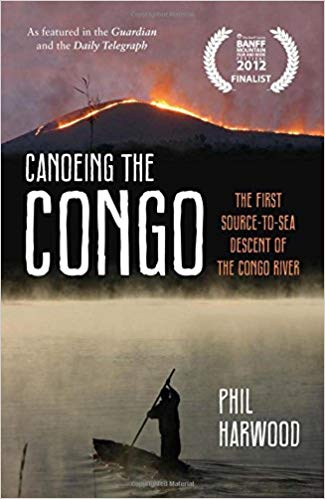
The Best Books: Canoeing the Congo

I've finally finished another book - it takes me ages these days. I used to go through books by the shelf load but real life is busy and by the time children and full time job and other commitments come along ... reading time is sparse and frequently cut short by sleep! 

Anyway...

I came across this book by accident, I'm pretty sure it was a suggestion from Amazon when purchasing a couple of 'adventure books' from my long, very long wish list. But I committed that cardinal sin - judging a book by it's cover - and decided that this was a book I needed to read. 

It ticked several boxes for me straight off the bat: 1) I bought a canoe, sorry - kayak, earlier this year as a new tool in the adventure tool kit and 2) I've always loved the idea of source to sea river journeys whether by land following the river or on the river, and 3) Africa calls my name - I need to visit one day. 

I completed my first source to sea trip last year, almost exactly a year ago in fact, and it was a journey I had been thinking about since I was a little boy! It only took me 20 odd years to realise the plan. It was much smaller than the Congo and didn't go exactly to plan anyway, but was a great journey and learning experience none the less. My source to sea journey was following the Ystwyth river in mid Wales - you can read about it here. It will not be the last source-to-sea journey I do, that is for sure. 

But the book! Well it does what it says on the tin... or cover. It recounts the journey of Phil Harwood down the full length of the river Congo by canoe - the bits he could traverse without being obliterated by raging, white water anyway. Geography has always fascinated me and the Congo is a river I had certainly heard of, but could not have told you anything about the river, with the possible exception of fact that it flowed through the country of the same name.  I now know a lot more, but this book is a lot more than a geography lesson.

This certainly isn't one of those natural history books which waxes lyrical and poetic about the 'personal journey' or anything like that. It is more a diary of what by any standards is a blooming exciting and even terrifying journey. Crocodiles, Hippos, occasionally angry and threatening locals, biblical rapids, literally uncharted territory AND setting off to do it on his lonesome. Phil may not be the most gifted or flowery author but he is clearly a pretty brave chap. 

Of course the trip is not all danger and isolation. It also illustrates the diversity of the world we inhabit and that there are good people everywhere. And it is a cultural and sociological insight into just how easy I and others like me have had it; a relatively wealthy up-bringing in a peaceful, European nation. I like to think that I am a little more aware than some of the scale of the privileges I have been blessed with. I lived in South America and the Caribbean for a few years and while there was witness to unquestionable and genuine poverty, but one thing which wasn't present even in those poor nations was the aftermath of decades of war and civil unrest which are still making their presence felt even years later. 

Has it lessened my desire to visit Africa? No. Has it opened my eyes to what the realities of travelling in that continent may hold? Yes, I would say it has. Will I be disappearing off to canoe the Congo myself anytime soon? No, for starters my wife wouldn't let me! 

Which brings me on to the final point which this book highlighted for me - that long, solo canoe journeys and water travel in general are not to be taken lightly. I better get training then!

To anyone for whom adventure, travel, far flung places, the splendour of the natural world or the diversity of human culture and experience holds any interest, this book is worth the time to read, even if like me your reading time is short and precious!

Richard


Thursday, 14 February 2019

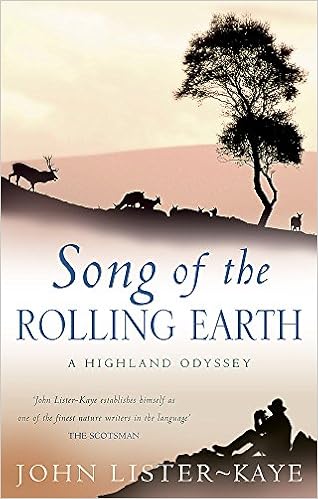
The Best Books: John Lister-Kaye - Song of the Rolling Earth

Image result for song of the rolling earth cover imageOK, so I will start this review by being honest - I finished this book over 6 months ago and forgot to write about it at the time. Now, I can't remember quite as much about it, which puts a bit of a damper on writing a review about it. But, one thing I remember very clearly is that you should read it. Anyone who has any interest at all in natural history, British wildlife, Scotland - including its cultural history, conservation, success stories, family life, adventure, wilderness or the peace and tranquillity of wild places will enjoy this book. Especially Scotland.

I remember that it doesn't read as if he set out to write a book, rather that he spent a long time living life to the full and in looking back realised that other people may find it interesting. And I for one certainly did. I liked it enough that I immediately bought another of his books and will continue to add his works to my collection as pocket money, shelf space and the seemingly never-dwindling back log of books to read permits.

I had long been aware of the Aigas Field Centre, though pretty sure I've been mispronouncing it the entire time, so thought when I first heard of this book that it would be an interesting read. But it is so much more than simply the story of how the Field Centre came to be - it is the story of someone who had a dream and, having worked their socks off for it, achieved it and a whole lot more besides. And for that I commend Sir John.

One story which I remember more clearly than many of the others which have faded (this is certainly a book I would read again to sharpen those memories) is the account of a boat trip down a river with his young daughter where they came face to face with an otter while resting on the bank - what a experience. I took it as a reminder to me that the ideas and plans I have for my daughter (and son when he is a bit older) to join in my 'adventuring' and ongoing learning about the natural world and its pleasures and intricacies don't have to be pie-in-the-sky. They really can happen and they really can make a difference - I just have to make the effort to get them off the ground.

Reading Song of the Rolling Earth while waiting in
my tent for dinner to cook on Vatersay in the Outer
Hebrides, Scotland. 
 
While I have taken many things away from this book - an even greater love of Scotland, an admiration of Sir John and the power of working towards your dreams despite opposition and discouragement, an increased sense of humility that I have been born in an age and in a place where I really have had it easy to name just a few examples - perhaps the greatest lesson I will cling to is that dreams come true in Scotland... and perhaps other places too.

I'm glad I got to read at least a portion of this book while in Scotland myself. Walking and wild camping around an Island in the Outer Hebrides which still hosts the crofts and small rural communities which are described to some extent in the book. That trip was in itself a dream come true for me. A dream probably 15 years in the making and it lived up to the expectation and anticipation that had been accumulating over that time.

In conclusion I would propose that the "Song of the Rolling Earth" Sir John describes throughout this book is the soundtrack of dreamers. OK, that was a bit flowery, just read the book already.

Richard

Saturday, 27 January 2018

The Best Books: Rob Penn - The Man who made things out of trees

I think anyone likely to be reading this will have gathered by now that I love the natural world. For the avoidance of doubt: I LOVE it! Everything about it.

Not just being in it and watching it (although that has to come top of the list), but reading about it, learning about it, photographing it, conserving it, working in it and with it, watching other people enjoy it, teaching other people about it and introducing my family to it.

One aspect of my enjoyment of the natural world that I don't often talk about is working with natural materials. While my skill level is very low (hence not talking about it much, but perhaps I should mention it more - watch this space) my enjoyment of working with natural materials, primarily wood is huge. The process of making the few things I have managed to construct from scratch has been addictive; the satisfaction of producing something functional (rarely beautiful from my hands) from something natural is not to be under-estimated. I am fascinated by the unique properties of natural materials, their frequent lack of uniformity. More often than not the best way to make the most of the material is to work with its individuality rather than in forcing your own will upon it and that requires consideration and problem solving.

I first came across Rob Penn when I saw his documentary series on BBC - Tales from the Wild Wood - the story of his project to rejuvenate an old, unmanaged woodland near his home. I was fascinated - I've always loved the idea of woodland work, coppicing and felling trees, splitting firewood, using the harvested material to make and sell things of value and function. I was envious of Rob to say the least, and ached for an opportunity to be involved in something similar myself. So a few years later when presented with an opportunity I did so - setting up The Riddy Wood Project with my brother (more on that another time).

Since that time I've seen glimpses on social media of Rob's involvement in the Small Woods Association, Woodland Trust and similar campaigns promoting sustainable use of British woodlands and trees. As soon as I heard this book was to be released I knew it was one I would like to read - and I did.

There are books which cover a broad topic with a light touch approach, providing for the reader only a scratch-the-surface-deep knowledge of many aspects of the subject. This is not ones of those books. He has taken one, very specific subject - the Ash tree - and drilled deep down to the depths of what there is to know. From the trees biological traits, its geographical distribution and physical attributes to its historical significance and use, and its modern day relevance, Rob has clearly delved deep and provides a fascinating, educational and easily readable account of his journey of personal learning and discovery into the Ash as a tree, a material and a symbol. Literally travelling across continents to fill gaps in his understanding he has left no stone (or perhaps leaf would be more appropriate) unturned in his account of how, what and why the ash holds a special place in his heart, as well as in the hearts of many others across the world.

In doing so he has also opened a doorway into the world of traditional craftsman and skills fighting to remain relevant in a mechanised and hydro-carbonised global economy. What place does a hand turned ash bowl or a steam bent ash chair have in this mass produced, throw-away society? It's place is the one we make for it - these skills will die once and for all if the people who appreciate the tradition and the talent and the art behind them dry up and turn to anonymous and soul-less alternatives. These sort of items aren't the cheap option any longer, but they are are more than just the sum of the parts of which they are constructed or formed; they are a symbol of what has gone before and an icon of what can yet be a sustainable and effective and viable and beautiful resource going forward into the future. 

In case you hadn't already cottoned on, I would thoroughly recommend this book to anyone. Whether your interest lies in the historical, the ecological or the artistic, in engineering, in traditional rural crafts or in general knowledge and interest; there will be something of interest to you.

Richard


Saturday, 30 December 2017

'The Best Books' - Robert McFarlane: The Wild Places


Reading is a luxury I don't get in large quantities these days - work, family, church, part time work (glorified hobbies), photography - they all take their chunk of time. As a kid I used to read loads and when we first got married, before I started University, we both used to read loads together - probably because we couldn't afford to do much else! These days what would have been my typical reading time - the period between going to bed and falling asleep - is often so short that reading the blurb in one go would be a struggle.

Anyway - that slightly off topic waffle goes to explain why it took me nearly two years to finish reading this book, but it was certainly worth persevering!


I'd been aware of Robert Macfarlane as an author for a while but not had an opportunity to read any of his books until a few years ago when I requested a few for a Christmas present (or Birthday... I can't actually remember!). Thereafter I started reading it in fits and spurts as time allowed, which often meant while I was away from home on trips - working in the woods, holidays visiting family and so on - when the normal routines which fill up your day were disrupted enough to free up a bit of time in the day. These are also the times when I am most likely to be able to spare some time for adventure, exploration and time spent out of doors in the peace that the natural world provides, either as a family or occasionally solo. 

And this is the core of the 'The Wild Places' narrative. It is certainly something that resonates with me - an exploration of the last places in the UK which can still be considered as wild, what an adventure! I'm lucky enough to be familiar with a few of the places he visited in the writing of the book. I even read the chapter about coastal wildness - which recounts a visit to Orfordness on the Suffolk coast - the night after a micro-adventure of my own in that area. My in-laws live just a few miles from Shingle Street, the little hamlet where the spit fades away and joins the North Sea. My brother in law had recently acquired a set of inflatable canoes and had been looking for a chance to try them out. Being mid-summer we made the most of the long evening and stole away for a few hours to try the new toys. The sunset canoe expedition which followed is a fond memory which I have written about before and took us up river toward Orford flanked by Orfordness to the East and the salt marsh on our landward side. We stopped briefly on the shingle to enjoy the views before heading back to our start point... a journey made far more difficult by the tide which had turned and was now racing in. We ended up walking back to the car, beaten by the speed of the inbound tide which rendered our inexperienced paddling completely useless as we struggled to not be drawn back inland, let alone making significant forward progress!

Suffolk was among the tamer landscapes and habitats described. Trips to islands, far flung, dune clad coastlines, limestone pavements and the hidden world within there shaded grykes, windswept moorland, barren mountains tops and snow covered bogs with the shadow of ancient woodland are all described in a detail which simultaneously transports you there in person while instilling a burning desire to make a similar pilgrimage to such places yourself . Ever since reading about a night Macfarlane spent on top of Ben Hope near the north coast of Scotland I have been trying to find a reason to justify the 1000 mile round trip to see it for myself. I haven't found a reason yet... but it isn't going anywhere, I'll figure it out someday. 

Of course his trip to the Hope Valley in Derbyshire to look for mountain hares is something I can recreate far more simply - given that my office is in the valley next door! That's not to belittle the experience, I still love to see the white hares bounding away, particularly when there is snow on the ground. So far this year I have been tied up with office work and haven't been up on the hills yet to see them in their winter coats. Luckily there is certainly good opportunity for me to do so in the new year and I'll be sure the make the most of it! It is easy to forgot - working there everyday - that to so many people in the UK coming to the Peak District is a way to escape the daily grind of work, whereas for me, it is work. 

The picture at the top of the page was taken while on a short trip of my own - I was on route to watch a rugby game in Cardiff with my family. Having spent many of my formative childhood years in Wales I made the most of the opportunity by travelling down through Wales revisiting old haunts. In the evening I travelled to the end of the Gower Peninsula on the south coast of Wales to watch the sun go down over Worms Head. It wasn't long after I had acquired my new camera and I attempted to capture the scene with a time lapse... it wasn't the greatest success (you can watch it here if you really want!), but it gave me an hour on a wild coastline to sit in beautiful surroundings and read about Macfarlane making a trip to a comparable coastline a few hundred miles north, only he was approaching from the sea.

I won't go on - discussions of this nature get my mind racing through the long list of places I'd like to visit. And while patience is certainly a virtue it's not one I'm blessed with in abundance. There is a real risk I will lay awake at night dreaming of the Cairngorms, or the Outer Hebrides, or the wild rivers of mid-wales where I swam as a child, or the rugged coastline of Devon where I camped as a teenager... you see what I mean!? Much like 'The Wild Places', my list of dream destinations are largely in the UK. We are blessed with such a diverse island, or series of islands, that international travel isn't necessary if you goal is to visit wild places. If you're struggling for ideas then reading 'The Wild Places' will certainly give you food for thought, in fact it will be a feast! 

Follow Robert Macfarlane on:
Twitter:       @RobGMacfarlane
Instagram:   @robgmacfarlane

Alternatively have a look at all of his books here at his Amazon author profile.


Monday, 9 October 2017

'The Best Books' - David Attenborough: Life on Air

Just a short post here. Like many people who have an urge to explore the natural world and seek out adventure, books have been a source of encouragement, inspiration and itchy feet since I was a child - (Television documentaries too, but to a lesser extent). I thought I might on occasion share examples of books which have really stood out to me in this field. What better place to start than with Sir David Attenborough's memoirs - Life on Air.

The man himself needs no introduction - he is a legend (and I don't apply that word as readily as most) in the world of natural history film making and global environmental conservation.

In a career spanning more than 60 years of conservation, exploration, education and research he has clocked up experiences it is unlikely anyone else will now be able to have in quite the same way and certainly not in the same quantity.

Not many people still working today can claim that in the line of their work they have encountered tribes never before contacted by the outside world; regions never before traversed by Europeans; filmed, photographed, recorded or documented species of animals, facets of primitive and ancient culture and relics of anthropological development never before seen by outsiders, never mind recorded, or documented. 

His world travel started in the days when multi-day boat journeys, propeller driven planes and locals with dug-out canoes were the norm. In these days of long-haul jets and global communications, where an appropriately large bank balance will get you pretty well anywhere pretty fast, it is perhaps difficult to imagine quite what these days were like. Maybe, just maybe, this was the golden age of travel - when everywhere was just about accessible, but only to those who really put in the effort. When the act of travel itself, at least outside of Western developed nations, was an adventure in and of itself. He travelled, by necessity, not because it looked good for television, by boat up rarely navigated rivers, on foot through unexplored tracts of rain forest, on horseback through wetlands in South America where vehicular transport was untenable - the list goes on and on. 

Nor was he merely a generic presenter reading someone else's script as seems to be the case so often nowadays. In fact he started his television career as a producer and director without appearing in the finished product. He studied Zoology and Paleantology at Cambridge, and at one point started to study part-time (alongside his work with the BBC) for a degree in Anthropology (this was interrupted by an administrative shake up which saw him promoted within the BBC). His main roles in front of the camera, for which he became a household name, were to come later and, its not an exaggeration to say, were to change the way natural history films were made.

He has been widely recognised for this work with, among other accolades, a Knighthood, too many honourary degrees to count and other industry awards in television, education and conservation, not to mention myriad newly discovered species named after him.   

However, he concludes his account with a description of why he continued, and indeed still continues, to produce these films and have these adventures:

"...I know of no pleasure deeper than that which comes from 
contemplating the natural world and trying to understand it."

I couldn't agree more and heartily recommend you live some adventures, and explore the natural world through the eyes of Sir Attenborough by reading 'Life on Air'.

Richard