Showing posts with label Exploration. Show all posts

Wednesday, 19 June 2019

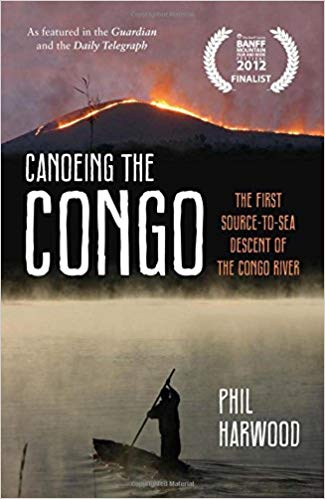
The Best Books: Canoeing the Congo

I've finally finished another book - it takes me ages these days. I used to go through books by the shelf load but real life is busy and by the time children and full time job and other commitments come along ... reading time is sparse and frequently cut short by sleep! 

Anyway...

I came across this book by accident, I'm pretty sure it was a suggestion from Amazon when purchasing a couple of 'adventure books' from my long, very long wish list. But I committed that cardinal sin - judging a book by it's cover - and decided that this was a book I needed to read. 

It ticked several boxes for me straight off the bat: 1) I bought a canoe, sorry - kayak, earlier this year as a new tool in the adventure tool kit and 2) I've always loved the idea of source to sea river journeys whether by land following the river or on the river, and 3) Africa calls my name - I need to visit one day. 

I completed my first source to sea trip last year, almost exactly a year ago in fact, and it was a journey I had been thinking about since I was a little boy! It only took me 20 odd years to realise the plan. It was much smaller than the Congo and didn't go exactly to plan anyway, but was a great journey and learning experience none the less. My source to sea journey was following the Ystwyth river in mid Wales - you can read about it here. It will not be the last source-to-sea journey I do, that is for sure. 

But the book! Well it does what it says on the tin... or cover. It recounts the journey of Phil Harwood down the full length of the river Congo by canoe - the bits he could traverse without being obliterated by raging, white water anyway. Geography has always fascinated me and the Congo is a river I had certainly heard of, but could not have told you anything about the river, with the possible exception of fact that it flowed through the country of the same name.  I now know a lot more, but this book is a lot more than a geography lesson.

This certainly isn't one of those natural history books which waxes lyrical and poetic about the 'personal journey' or anything like that. It is more a diary of what by any standards is a blooming exciting and even terrifying journey. Crocodiles, Hippos, occasionally angry and threatening locals, biblical rapids, literally uncharted territory AND setting off to do it on his lonesome. Phil may not be the most gifted or flowery author but he is clearly a pretty brave chap. 

Of course the trip is not all danger and isolation. It also illustrates the diversity of the world we inhabit and that there are good people everywhere. And it is a cultural and sociological insight into just how easy I and others like me have had it; a relatively wealthy up-bringing in a peaceful, European nation. I like to think that I am a little more aware than some of the scale of the privileges I have been blessed with. I lived in South America and the Caribbean for a few years and while there was witness to unquestionable and genuine poverty, but one thing which wasn't present even in those poor nations was the aftermath of decades of war and civil unrest which are still making their presence felt even years later. 

Has it lessened my desire to visit Africa? No. Has it opened my eyes to what the realities of travelling in that continent may hold? Yes, I would say it has. Will I be disappearing off to canoe the Congo myself anytime soon? No, for starters my wife wouldn't let me! 

Which brings me on to the final point which this book highlighted for me - that long, solo canoe journeys and water travel in general are not to be taken lightly. I better get training then!

To anyone for whom adventure, travel, far flung places, the splendour of the natural world or the diversity of human culture and experience holds any interest, this book is worth the time to read, even if like me your reading time is short and precious!

Richard


Thursday, 8 March 2018

Wild Moments: The precious privilege of cultivating the spirit of adventure in a young heart.


** Another 'Wild Moment' considering something close to my heart - family, children and introducing them to the natural world and adventure **

Life is busy, isn't it? I'm sure it's not just mine. Commitments pile up, calendars fill and free time dwindles at an ever increasing pace. I often talk of needing to 'make' time and it sometimes does feel like a significant project to engineer opportunities for time out of doors, or for 'an adventure'. Adding children to that mix doesn't make it easier (or cheaper) - 'bed time' is suddenly 4 or 5 hours earlier; a 'good nights sleep' becomes an exception rather than an expectation; a 'walk' with a toddler can be considered long if you leave the car park rather than the county!

BUT - and it is a big one - as a parent you have an opportunity to plant the spirit of adventure in a fresh heart, and to see the excited twinkle of exploration in new eyes. I have always loved the outdoors, I still do, and I am fairly confident that I always will. I still enjoy spending that time in the natural world alone and at my own pace (which I like to think is reasonably quick... unless I'm taking photos). But there are very few things I enjoy more than witnessing the excitement in the eyes of our children when they are presented with the opportunity to do something new, something adventurous! Adventurous to them is at a different place on the spectrum than it is for me, of course it is. After all every one starts somewhere - Sir Edmund Hilary didn't start with Everest, nor was Amelia Earhart's first flight an around the world venture. *Add your favourite example of an intrepid adventurer here*. 

As parents we have tried (there is still a lot we could do better) to cultivate that adventurous spirit in our children because we hope that if we start them young that it will sink deep and they will seek 'adventure' for the rest of their lives. Yes, there are times when this meets with resistance: 'it's too cold', 'it's too wet', 'it's too windy', 'it's too sandy'. But that resistance will weaken over time. Our daughter once spent a whole warm, summer day on the beach sat in a folding chair with her feet on a towel because she refused point blank to get sand on her feet! The following year we visited a Scottish beach in April (it was much colder!) and she loved it! She played in it, rolled down sand dunes, dug holes and jumped in them - when we got back to where we were staying there was sand everywhere. Stick with it and the resistance will fade.

I was 24 when our daughter was born - that is pretty young these days to have a first child and I often have conversations where the reaction to learning this (sometimes spoken and sometimes inferred) is that my opportunities for fun therefore ended at 24. But I see it entirely differently. The way I see it is that when she becomes a teenager I'll still only be 37 (and 40 when our little boy becomes a teenager). Hopefully I will still be fit enough at that relatively young age that I will still be able to keep up with them when they take that spirit of adventure which we have instilled in them and want to do something really interesting!


So yes we may have sacrificed some of our perceived freedom as young adults to have a family early. But to me, rather than missing opportunities for fun and adventure, we have created the opportunity further down the road to share our fun and adventure with the people who matter most to us - our children.


Saturday, 30 December 2017

'The Best Books' - Robert McFarlane: The Wild Places


Reading is a luxury I don't get in large quantities these days - work, family, church, part time work (glorified hobbies), photography - they all take their chunk of time. As a kid I used to read loads and when we first got married, before I started University, we both used to read loads together - probably because we couldn't afford to do much else! These days what would have been my typical reading time - the period between going to bed and falling asleep - is often so short that reading the blurb in one go would be a struggle.

Anyway - that slightly off topic waffle goes to explain why it took me nearly two years to finish reading this book, but it was certainly worth persevering!


I'd been aware of Robert Macfarlane as an author for a while but not had an opportunity to read any of his books until a few years ago when I requested a few for a Christmas present (or Birthday... I can't actually remember!). Thereafter I started reading it in fits and spurts as time allowed, which often meant while I was away from home on trips - working in the woods, holidays visiting family and so on - when the normal routines which fill up your day were disrupted enough to free up a bit of time in the day. These are also the times when I am most likely to be able to spare some time for adventure, exploration and time spent out of doors in the peace that the natural world provides, either as a family or occasionally solo. 

And this is the core of the 'The Wild Places' narrative. It is certainly something that resonates with me - an exploration of the last places in the UK which can still be considered as wild, what an adventure! I'm lucky enough to be familiar with a few of the places he visited in the writing of the book. I even read the chapter about coastal wildness - which recounts a visit to Orfordness on the Suffolk coast - the night after a micro-adventure of my own in that area. My in-laws live just a few miles from Shingle Street, the little hamlet where the spit fades away and joins the North Sea. My brother in law had recently acquired a set of inflatable canoes and had been looking for a chance to try them out. Being mid-summer we made the most of the long evening and stole away for a few hours to try the new toys. The sunset canoe expedition which followed is a fond memory which I have written about before and took us up river toward Orford flanked by Orfordness to the East and the salt marsh on our landward side. We stopped briefly on the shingle to enjoy the views before heading back to our start point... a journey made far more difficult by the tide which had turned and was now racing in. We ended up walking back to the car, beaten by the speed of the inbound tide which rendered our inexperienced paddling completely useless as we struggled to not be drawn back inland, let alone making significant forward progress!

Suffolk was among the tamer landscapes and habitats described. Trips to islands, far flung, dune clad coastlines, limestone pavements and the hidden world within there shaded grykes, windswept moorland, barren mountains tops and snow covered bogs with the shadow of ancient woodland are all described in a detail which simultaneously transports you there in person while instilling a burning desire to make a similar pilgrimage to such places yourself . Ever since reading about a night Macfarlane spent on top of Ben Hope near the north coast of Scotland I have been trying to find a reason to justify the 1000 mile round trip to see it for myself. I haven't found a reason yet... but it isn't going anywhere, I'll figure it out someday. 

Of course his trip to the Hope Valley in Derbyshire to look for mountain hares is something I can recreate far more simply - given that my office is in the valley next door! That's not to belittle the experience, I still love to see the white hares bounding away, particularly when there is snow on the ground. So far this year I have been tied up with office work and haven't been up on the hills yet to see them in their winter coats. Luckily there is certainly good opportunity for me to do so in the new year and I'll be sure the make the most of it! It is easy to forgot - working there everyday - that to so many people in the UK coming to the Peak District is a way to escape the daily grind of work, whereas for me, it is work. 

The picture at the top of the page was taken while on a short trip of my own - I was on route to watch a rugby game in Cardiff with my family. Having spent many of my formative childhood years in Wales I made the most of the opportunity by travelling down through Wales revisiting old haunts. In the evening I travelled to the end of the Gower Peninsula on the south coast of Wales to watch the sun go down over Worms Head. It wasn't long after I had acquired my new camera and I attempted to capture the scene with a time lapse... it wasn't the greatest success (you can watch it here if you really want!), but it gave me an hour on a wild coastline to sit in beautiful surroundings and read about Macfarlane making a trip to a comparable coastline a few hundred miles north, only he was approaching from the sea.

I won't go on - discussions of this nature get my mind racing through the long list of places I'd like to visit. And while patience is certainly a virtue it's not one I'm blessed with in abundance. There is a real risk I will lay awake at night dreaming of the Cairngorms, or the Outer Hebrides, or the wild rivers of mid-wales where I swam as a child, or the rugged coastline of Devon where I camped as a teenager... you see what I mean!? Much like 'The Wild Places', my list of dream destinations are largely in the UK. We are blessed with such a diverse island, or series of islands, that international travel isn't necessary if you goal is to visit wild places. If you're struggling for ideas then reading 'The Wild Places' will certainly give you food for thought, in fact it will be a feast! 

Follow Robert Macfarlane on:
Twitter:       @RobGMacfarlane
Instagram:   @robgmacfarlane

Alternatively have a look at all of his books here at his Amazon author profile.


Tuesday, 7 November 2017

Finally made it to the Forest of Dean

We all have places we've wanted to visit or activities we've wanted to do 'forever'. Some of those wishes are realistic and others less so. For example, I'd love to go to New Zealand - and one day I might, but it won't be just yet. On the other hand, I've wanted to go to the Forest of Dean for a long time, and that is readily achievable, but I just haven't made the time or prioritised it over other opportunities.

But recently one of my brothers moved to Gloucestershire, right on the edge of the Forest of Dean. Last weekend we went to visit him and his family to get to see their new home and neighbourhood. It would have been a shame to miss out on a joint family walk, especially with the autumn colours at their best and the beautiful weather we had during our short stay.

One of the reasons I'd wanted to visit the Forest of Dean are the now infamous wild boar. I knew the boar themselves were likely to be illusive and didn't really hold out that much hope that we'd see one. But the evidence of their presence was certainly more conspicuous! The boars rooting around had turned the road verges over as effectively as the most diligent gardener. And then out of the blue and on route to our selected walking spot, there one was! As bold as brass rooting away right next to a public car park and attracting quite the crowd (including us). Having never seen a boar in England before it was quite the treat and the children enjoyed seeing the 'hairy piggy' too.

It had rained heavily overnight and the paths we walked were suitably muddy - muddy paths are always a bonus when you're walking with children. Even when, like our little lad, you often fall over in it. He spent a noticeable portion of our outing on his backside or face in the mud. We spent a happy couple of hours splashing in puddles, enjoying the autumn colours and foraging mushrooms for a late lunch (my brother is something of an expert so I feel comfortable picking them with him) before retracing our steps back to the car and heading home for a late lunch, bonfire and fireworks. Happy days!

The weather for our drive home through the midlands was as beautiful as the scenery and I was reminded yet again just what a beautiful country England is and how much we take our natural world for granted! We will continue to get our outdoors time as a family regardless of the cold and the mud as we get into Autumn and Winter.

Richard


Monday, 30 October 2017

Archive: Rivers - Supermarket, Highway, Inspiration

** I'm cheating a bit here - It's been a busy few weeks and I haven't had a chance to 
write any new blog posts, although there is stuff to write about! To keep material 
coming I thought I'd share this blog post from a blog I contribute to occasionally, 
originally written a few years back it is still as relevant now as when I wrote it. **

When I am out and about, whether it be for a gentle countryside walk with my family, a solo adventure, dedicated photography trip or a foraging session, I am always drawn to certain features in the landscape . Rivers are one of those features, particular smaller rivers in deep cut, wooded valleys. There is something about these valleys that never gets old to me. As a teenager on the North Devon coast I had plenty of opportunities to explore these sort of valleys, including in and around Exmoor, to this day one of my favourite parts of the UK. 

Me, contemplating life alongside the River Spey in Scotland.  
You may ask why, and I don't really know the definitive answer to that question but I have a few ideas. The first revolves around the concept of mental maps (something I had written about previously and will probably do so again for this blog), particularly resource maps. Rivers are a phenomenally rich resource (I originally wrote this for a bushcraft blog - www.bushcrafteducation.co.uk - and so it was originally aimed at foraging and that sort of topic):

First and foremost they are a readily available source of water. In the higher reaches of rivers where they run fast and clear it is also likely to be clean water which you can drink straight from the river. Even these days in areas where agricultural run off may have sullied the water, or in its lower reaches where it runs slow and silty, with simple techniques it can be filtered and purified to be made safe to drink.

They were to our hunter-gatherer ancestors an important source of protein, and still are today albeit one which is far less used than it once would have been, in the shape of water birds*, fish* and crayfish (although sadly these days an invasive species, the American Signal Crayfish which has driven our native White-clawed Crayfish to the edge of extinction). If you know where to look there may also be freshwater mussels or as you get closer to the coast and into the brackish and tidal zones of the river there may be other salt-water shellfish to harvest. 

With a constant source of water and, further down the river at least, nutrient rich silts, river valleys are often a great source of plant food as well. To name a few, wetland areas associated with rivers are often home to sedges (Carex spp.), some of which have seeds which can be eaten; Bulrush or Greater Reedmace (Typha latifolia) can be found which has edible rhizomes as well as being a useful tinder. These days in the UK several very common edible plants found along rivers are non-native species, certainly not something our hunter-gatherer forebears would have been familiar with - Himalayan Balsam (Impatiens glandulifera) and Japanese Knotweed (Fallopia japonica). And by eating either of these you are also doing your bit for conservation by reducing the population of an invasive plant. 

Some of the trees often found in close association with water are Willow species. Willow is an extremely useful plant to a bushcrafter providing bark for cordage & withies for basket making. In addition its bark contains Salicylic acid (in fact 'Salicylic' is derived from Salix, the Latin name for the Willow family) which is a component of aspirin and it has been known for centuries that chewing on willow bark could ease aches and pains and reduce fevers. 

Having established that rivers are useful for resources I think that part of my fondness for rivers stems from an instinctive draw to a landscape feature which is of use to me. But I don't think that's the whole story. 
Rivers are also beneficial for moving through the landscape. In a very modern sense we can see this based on how many roads or railway lines follow the course of rivers. In many circumstances the river bed itself will be the path through a landscape which experiences the least severe changes in elevation - waterfalls being a fairly obvious exception! By following these ready made paths modern engineers have saved themselves time and effort but also created for themselves different issues by placing their projects in the path of an immense erosive power - but that's another story.

I don't think this benefit would have been unappreciated by the people who roamed the land when roads weren't even a futuristic dream. Especially during the summer, when vegetation was at its highest and most impenetrable, and the water level was lower likely exposing a portion of the river bed, using these natural routes to move inland from the coast or the opposite would have saved effort and ensured that food to fuel your travels was never far away. Certainly in dense woodland I have followed small rivers or streams, sometimes alongside them and sometimes by necessity in them to aid my movements and help me to move more quickly or easily. It has long been a goal of mine to follow a river from its source to the sea - I think it would be a fascinating journey! 

In all this I have skirted around the potential of travel on the water itself. While not a expert in water travel I have been lucky enough to do a bit of kayaking and rafting both on rivers and the sea and it is a great way to travel. Early inhabitants of the UK may not have cashed in on this opportunity as much as those in other parts of the world, the effort required to manufacture water-borne vessels perhaps outweighing the advantages in many situations on a relatively small island. It is however well documented that early civilisations in other parts of the world focused their travel on waterways with variations on the theme of dug out canoes and later in the northern hemisphere with bark canoes. 

If you are referring back to the title you'll notice we are two thirds of the way through this tale. There will be those who read 'inspiration' in relation to 'river' and think I have lost it - city folks perhaps for whom rivers are places for stolen bikes and shopping trolleys, pollution outflows and perhaps if your lucky, the odd gull or duck. Luckily in Britain today even this inner city image of rivers is largely a thing of the past with tighter controls on pollution and water cleanliness but still the Thames in London or the Mersey in Liverpool are not the sort of rivers I look to for inspiration. 

The picture that comes to my mind when I think of inspiring rivers is a small river, wooded valley sides rising steeply above, clear water trickling quickly through a jumble of moss-covered rocks and woody debris. A Dipper rushing past or watching you from a half-submerged rock. Perhaps a little further downstream a whistle and a flash of blue alerting you to what has got to be the UK's most colourful bird, the Kingfisher, going about its business. If you're lucky some muddy footprints indicate a Otter isn't far away, and if your even luckier a glimpse of these now thankfully returning mammals. In the early morning mist a Roe deer perhaps, tentatively crossing from its shelter on one side to prime feeding ground on the other. As the sun gets higher, the dragonflies, the birds of prey of the insect world start to come to life. I could watch their aerial battles for territory and bright colours for hours before I got even a little bit bored. At the right time of year mayflies provide a spectacle, both as they 'dance' above the water and as they are fed on by every valley dweller you can imagine. I could go on... so I shall.

As a teenager I was lucky enough to work on a nature reserve for a week in Scotland. (On a side note, to any young person reading this, I cannot recommend highly enough this experience.) One day having been to check a hide over looking a large marshy flood plain alongside the river Spey, I spotted a family of fox cubs playing on a 'island' in the marsh, their earth was obviously located on the slightly higher and therefore drier ground above the wetland, among the gorse. On my return journey to my accommodation that evening, a gorgeous summer evening, I cut across the reserve - cresting a ridge having climbed up steeply through birch woodland I looked up to see an Osprey flying over, fish held tightly in its talons. Standing on the ridge transfixed by this spectacle I had never witnessed before I became aware of movement in the valley meadow below - a Roe buck, summer coat radiant red in the low evening sun had moved out of the woodland to browse. What a day! Not all strictly river associated but all within a stones throw.

The view from the hide I mention. The 'island' where I saw the foxes is in the middle ground on the left, the meadow where I saw the Roebuck a mile or so up the valley to the North (right in this picture). I have also seen Roe deer browsing through the marshland here - one doe in particular was selecting only umbellifer flower heads to eat, the only time I have seen this behaviour and a perfect example of the selective feeding style of Roe Deer. 
I know of no sound more relaxing and calming than the gentle trickle of a river to lull me off to sleep in an evening after a strenuous day out of doors. And in the same way I could sit, and have done on many occasions, and stare at a fire burning for hours, I could sit and watch a river flowing past, listening to its gurgles and trickles just as I listen to the pops and crackles of my fire. With the calls of Kingfishers or Dippers replacing the Tawny Owls I so often hear when sat by a fire in woodland.  

Beyond the river itself the landscapes they have created can be awe inspiring all on their own, dramatic landscapes all over the UK have been carved over many millennia by the rivers which now seem like a side show in the valley bottom. Caves and tunnels, stacks and caves and water falls all indicate the sheer power of water in the landscape and can be as spectacular as their coastal counterparts. 

We all I dare say have 'favourite landscapes' - I would certainly have to say that rivers and the associated valleys and wetlands are well up there for me. They provide food and fun, mental relaxation and the ability to move through the landscapes we love. What's not to like!

Richard


* - It needs to be remembered that the taking of certain fish and all water birds, and the methods of taking or catching them are restricted by law in the UK. In certain circumstances you may just need landowners permission, in other it is far more complicated.